Many signs can indicate the return of spring: temperatures are rising, trees are flowering, frogs are singing… And birds are returning from migration! For a bird lover like me, it’s a good sign!
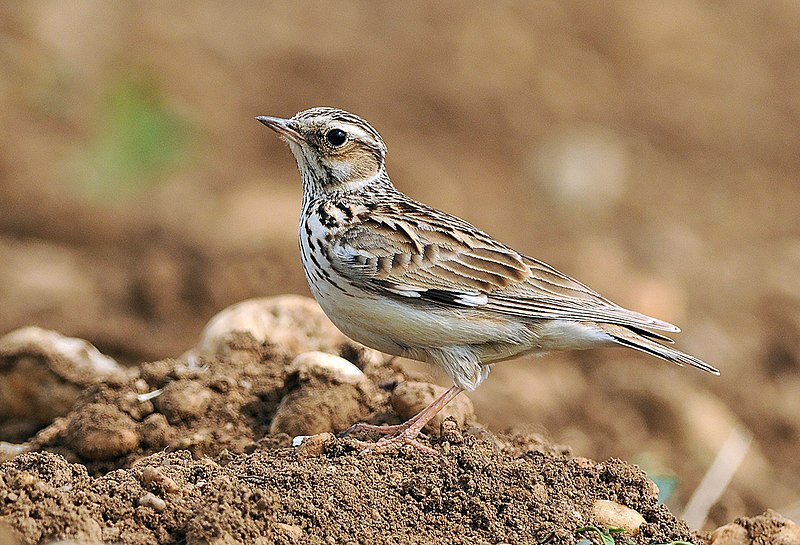
First species that came back to Bozevce was wood lark (Lullula arborea), on 16th of February. This species will not spend the winter far away: in Albania, Greece, or Bulgaria, along the milder climate shores of the Mediterranean and Black Seas.
Woodlark (Ján Svetlík, CC BY-SA 2.0)
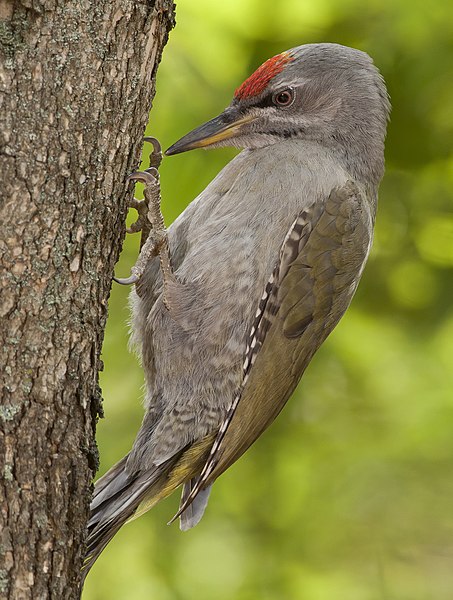
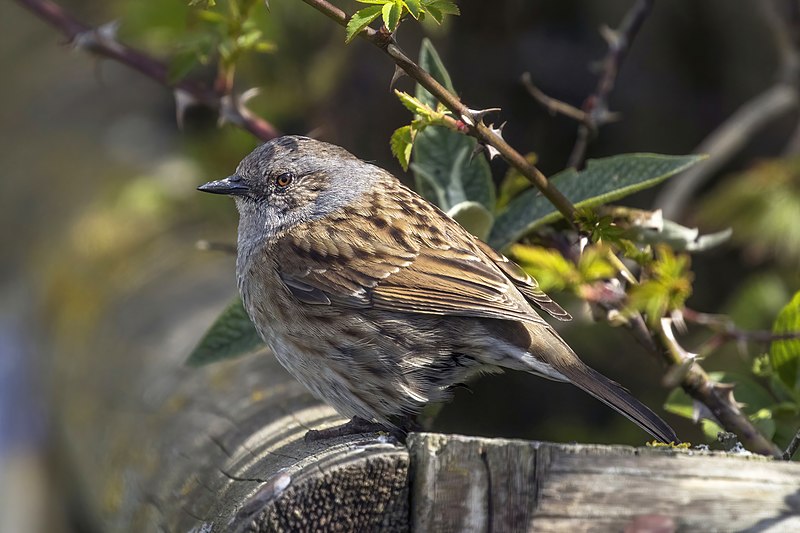
Then, I heard the first Chiffchaff (Phylloscopus collybita) on 10th of March. Chiffchaffs also spend winter quite close to Kosovo: in southern Europe and North Africa. One week later, Skylark (Alauda arvensis), Dunnock (Prunella modularis) and Grey-faced woodpecker (Picus canus) were also back. I was surprised to not have seen Dunnocks and Skylarks before. In fact, these two species don’t migrate in France, and can be seen all year round. However, birds breeding in continental eastern Europe migrate and spend the winter in southern and western Europe.
Left side : Grey-faced woodpecker (Бусел В.А., CC BY-SA 4.0). Upper right : Chiffchaff (Andreas Trepte, CC BY-SA 2.5), Middle right (Zeynel Cebeci, CC BY-SA 4.0), Lower right : Dunnock (Charles J. Sharp, CC BY-SA 4.0)
The Grey-faced woodpecker, (the 6th species of woodpeckers observed in Bozevce!) is normally a sedentary species. It is only known to be erratic during the autumn, and to sometimes carry out altitudinal migrations: individuals nesting in the mountains sometimes descend to the plains in winter to find food. Therefore, individuals returning to Bozevce may have just spent the winter further down the valley.
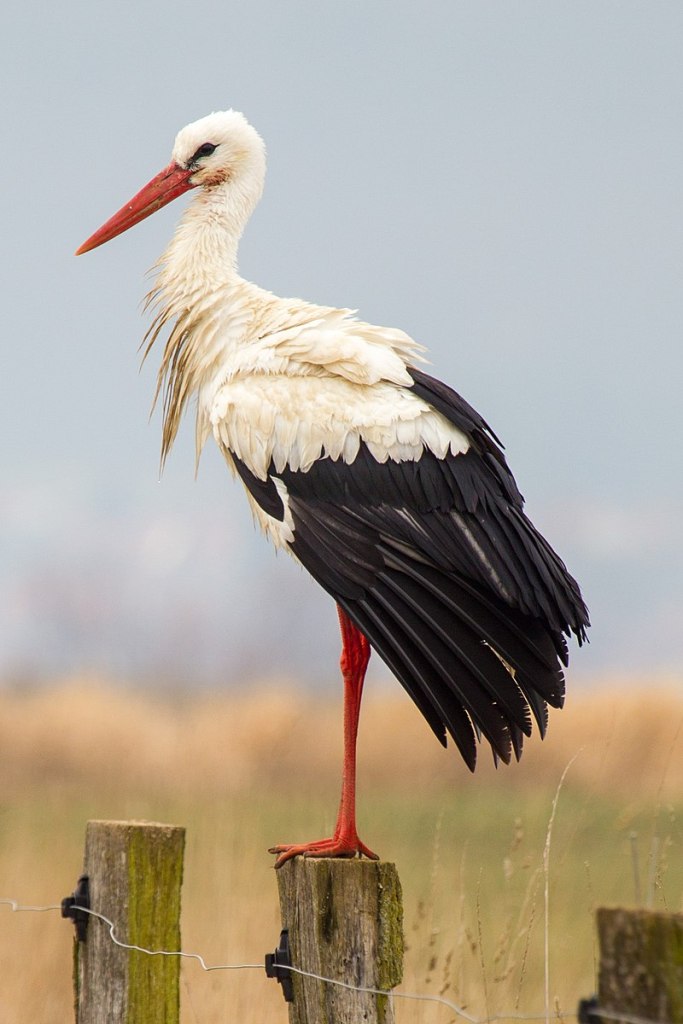
Lower in the valley, white storks (Ciconia ciconia) were also back on their nest. White storks spend winter in Sub-Saharan Africa. However, in many European countries, some storks no longer migrate. They benefit from easily accessible food in landfills, and from the milder temperatures caused by global warming.
White stork (Andreas Trepte – CC BY-SA 2.5)
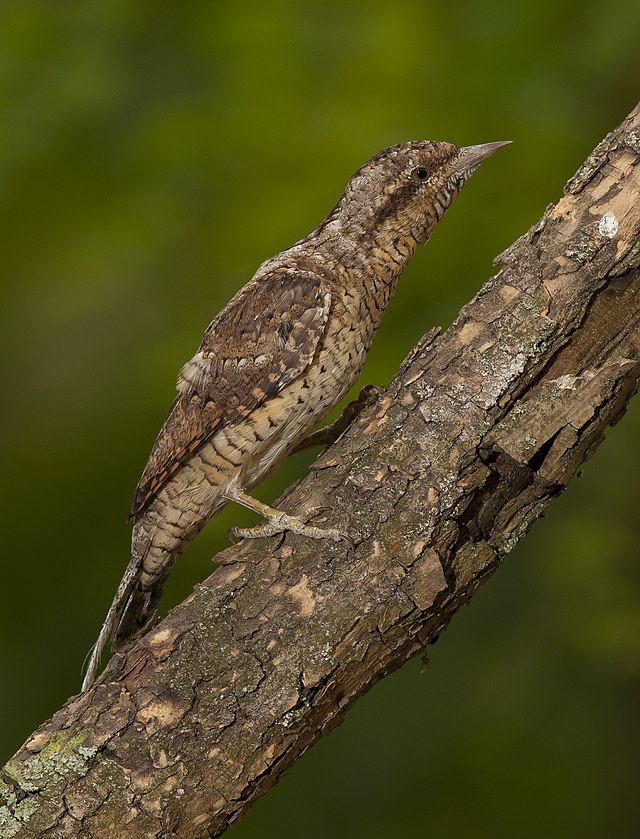
On 24th of March, thanks to its singing, I spotted a wryneck (Jynx torquilla). This very mimetic species from the woodpecker family just returned from equatorial Africa.
Wryneck (Бусел В.А., CC BY-SA 4.0)
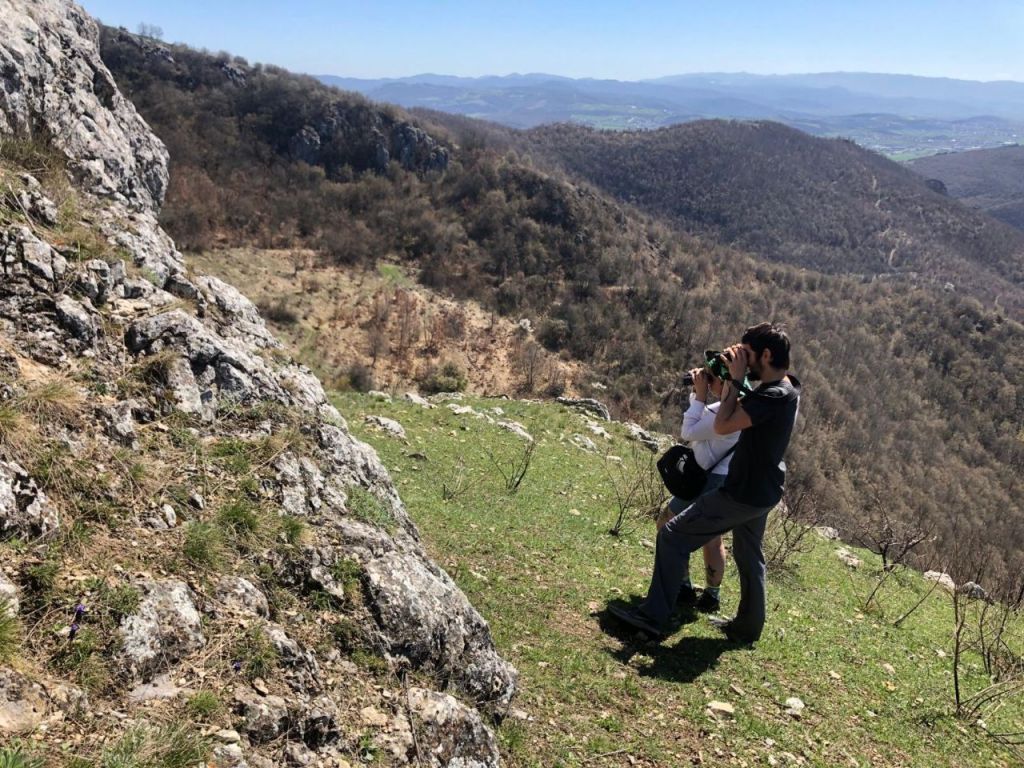
One week later, a rare species arrived in Bozevce… A French ornithologist! It was my brother, coming here to visit me. And with his arrival, the list of Bozevce birds took a leap! From 76 to 93 (and he was there only two weeks-end!).
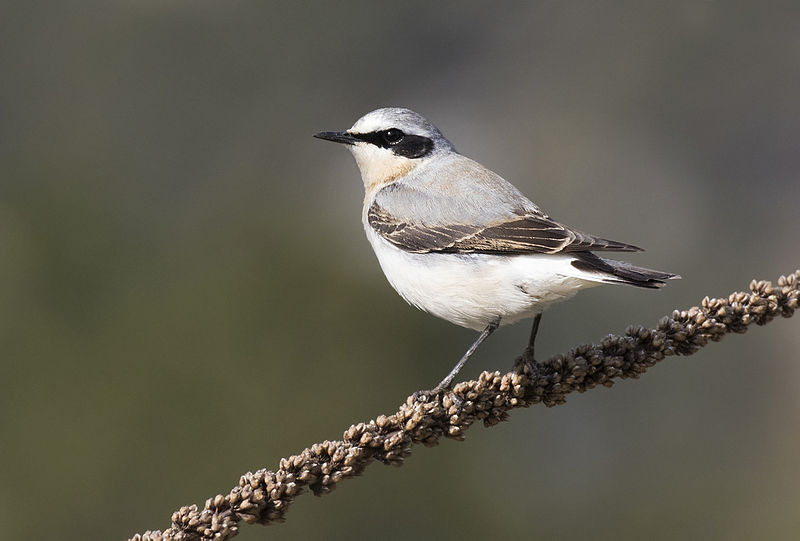
On his first weekend in Bozevce (31st of March), we spotted the return of Red-rumped swallow (Cecropis daurica), Barn swallow (Hirundo rustica), Crag martin (Ptyonoprogne rupestris), Blackcap (Sylvia atracapilla), Wood warbler (Phylloscopus sibilatrix), Nightingale (Luscinia megarhynchos) and Northern wheatear (Oenanthe oenanthe). After one week birdwatching in North Macedonia and Greece, we came back to notice the return of Cuckoo (Cuculus canorus), Hoopoe (Upupa epops), Common and Lesser whitethroat (Curruca communis and Curruca curruca) and Tree pipit (Anthus trivialis). Except Blackcap, who spends winter in Western and Southern Europe, and Crag martin, whose wintering grounds are in North Africa, all these birds are wintering in Sub-Saharan and Tropical Africa.
Upper left : Red-rumped swallow (Prasan Shrestha). Upper middle : Hoopoe (Sl-Ziga, CC BY-SA 4.0). Upper right : Northern weather (Zeynel Cebeci, CC BY-SA)
While breeding birds were arriving or on their way, the wintering birds left for northern Europe to breed there. This is the case of the Fieldfare (Turdus pilaris) and the Brambling (Fringilla montifringilla). See you next winter!
Others, including many birds of prey, are just flying over Bozevce during their spring migration. With my brother, we observed merlin (Falco columbarius), osprey (Pandion haliaetus), hen harrier (Circus cyaneus) and marsh harrier (Circus aeruginosus).
From left to right : Hen Harrier (Isle of Man Government, CC BY 2.0), Osprey, Merlin (Raj Boora – CC-BY 2.0), and Marsh Harrier (Zeynel Cebeci, CC BY-SA 4.0)
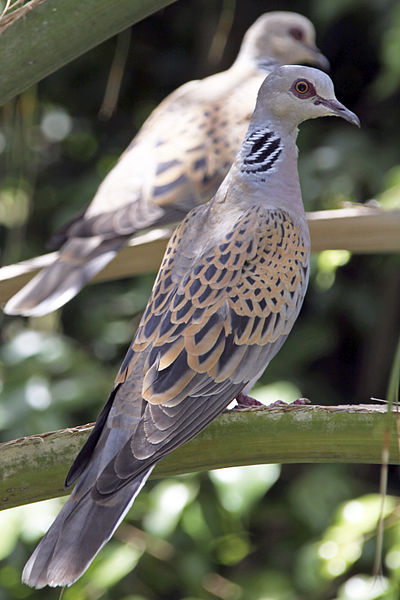
While my brother left, European turtle doves (Streptopelia turtur) came back on 13th of April. This species, which winters in Equatorial Africa, is severely declining, because of habitat destruction and hunting. As such, it is classified as vulnerable on the IUCN Red List. In Bozevce, this species is still common, and few males are singing in the village.
European turtle dove (Yuvalr, CC BY-SA 3.0)
Many birds have already returned, but the migration is not yet over! All species do not migrate in the same way or to the same place: it depends on their diet, their favorite habitat, their evolution… While birds that can feed on seeds in winter do not migrate or over short distances , those feeding only on insects migrate much further. And the birds migrating the furthest (South of Africa) are often those returning last. As I’m writing this, I still impatiently awaiting the return of Red-backed (Lanius collurio) and Woodchat shrikes (Lanius senator), of bee-eaters (Merops apiaster), of golden orioles (Oriolus oriolus), of spotted flycatchers (Muscicapa striata)…
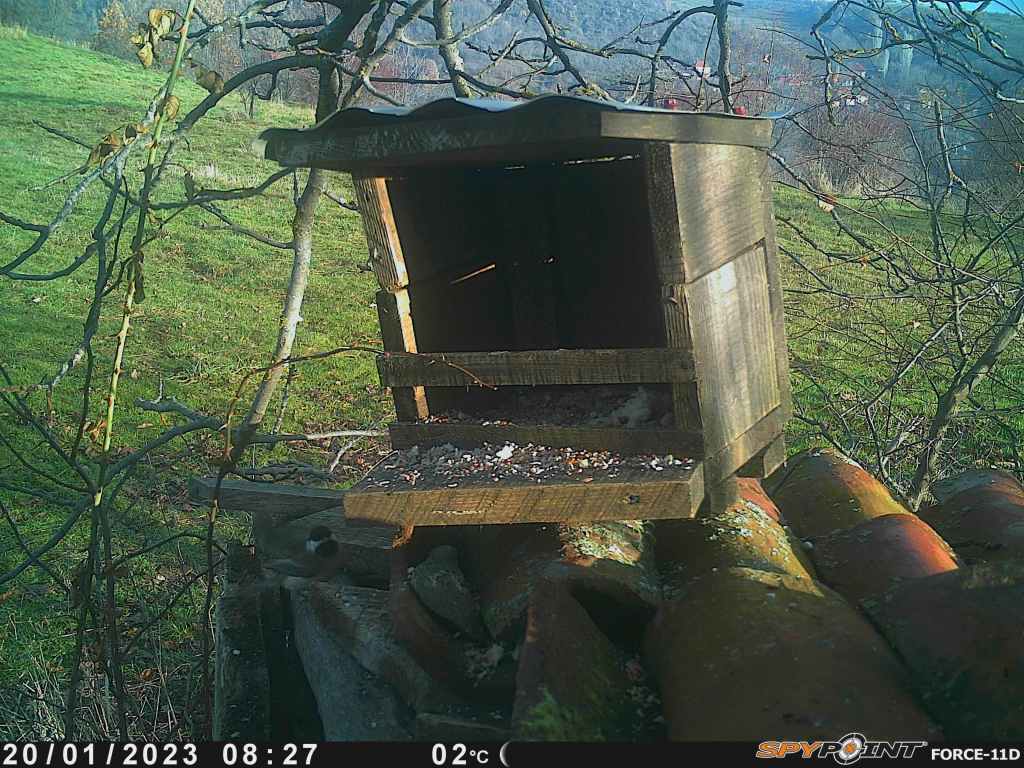
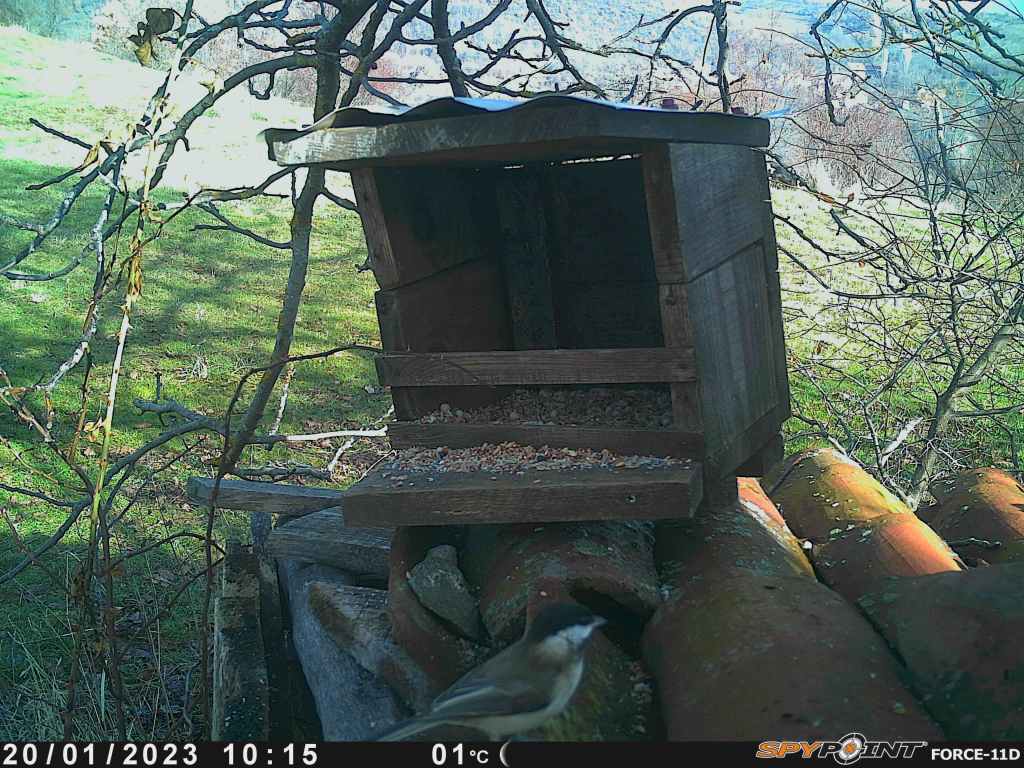
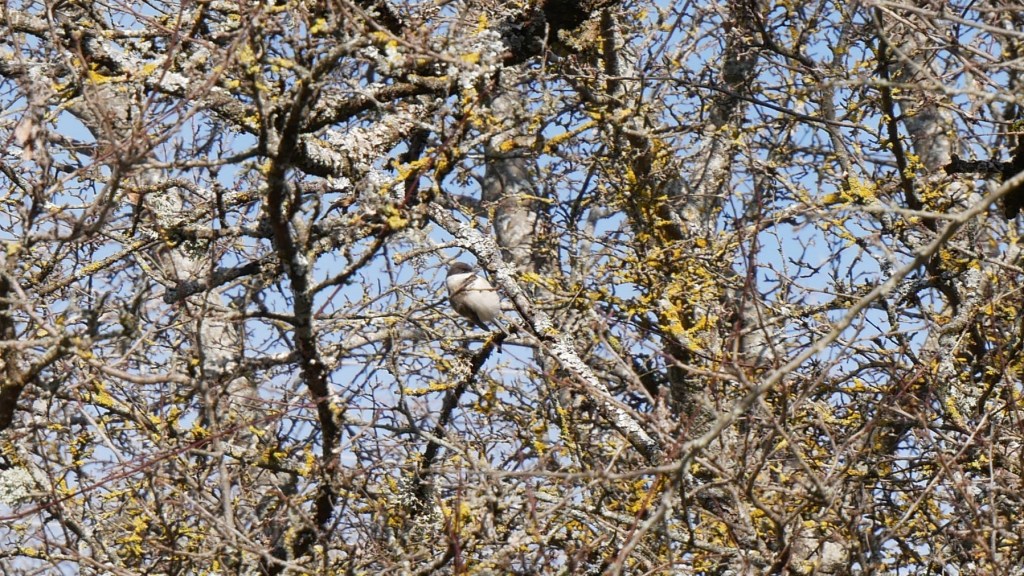
Among the birds that frequent the feeders in Bozevce, one is of special interest for me: the Sombre Tit (Poecile lugubris). Why? Because this species does not live in France, and I was therefore able to observe it for the first time here. So, it’s a discovery for me, but not for Bozevce, because some ornithologists (scientists studying birds) came to Bozevce a few years ago and recorded it.
About as big as the Great Tit, the Sombre Tit looks like Willow Tit in coloration. However, apart from its size, some others features, like the very large bib, make it easy to recognize.
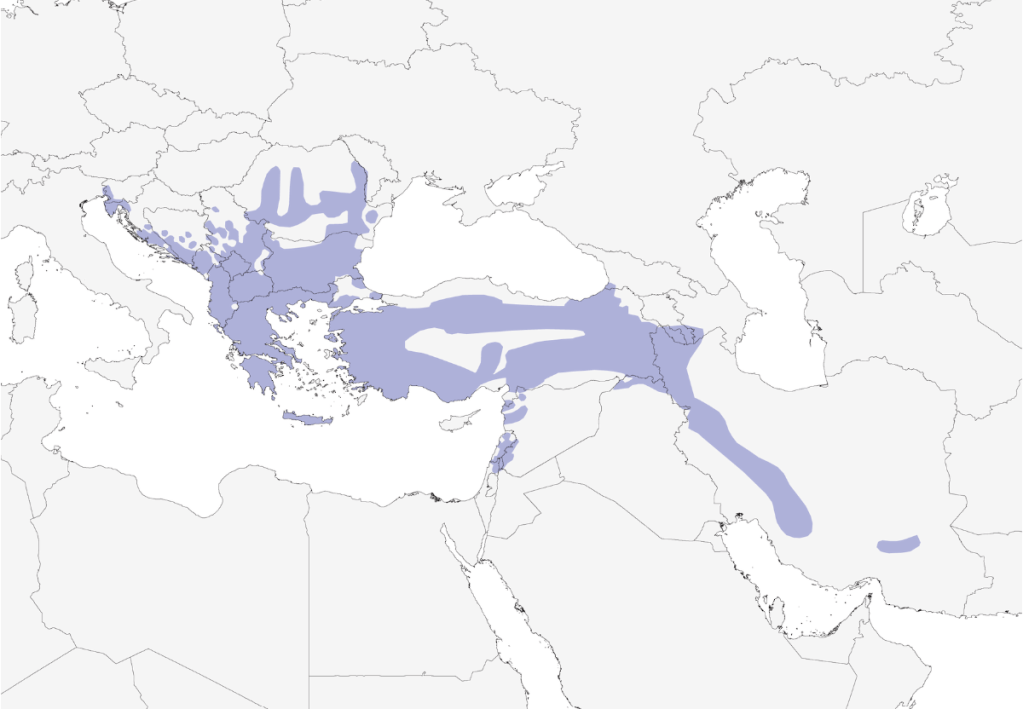
The Sombre Tit is mainly present in the Balkans, Turkey and Iran. The European population trend is currently estimated to be stable. They inhabit dry maquis areas of scattered trees and bushes, but can also be found in orchards, vineyards, and open oak forests. This last habitat is very common around Bozevce.
World distribution of the Sombre Tit
Sombre Tits breeds from March to July. The nest is placed in a hole in a tree, most often a fruit tree. This species digs its own cavity in decomposing wood. Sometimes, the nest can also be among rocks or on rocky banks. They also accept nestboxes. The interior of the nest, constructed with wool and plant fibbers, is lined with feathers. Sombre Tits lay 5 to 7 eggs which the female incubates alone for 12 to 14 days. Both parents feed the chicks, which remain in the nest for up to 22 days. When conditions are favourable, they can produce two broods in a year.
Sombre Tits eat principally insects although they do consume seeds as well. Foresighted, they stored up reserves for the winter. This species is less “sociable” than other species of Tits and does not form large groups in winter. In fact, this species is never very abundant as the Great Tit for example but is often observed in pairs. In Bozevce, I observed them in 8 different places, but they were never more than 2 individuals together.
Each time, it’s a pleasure to see them, and I will enjoy it, because in France, I wouldn’t have this chance!
Roots of Permaculture is available for youth work practicionaires that are interested to learn how to use permaculture in social settings. The maunal is translated to Albanian and French languages and complemented with the set of educational cards.
Today we lose another minute of sun Max said this morning. So, enjoy every moment of day, Maja added. And, indeed, days are shorter, walnuts are falling, the valley is flaring up with red and yellow leaves, the living room smells like burning wood and tangerines: it’s time to write about Autumn!
Autumn was on time. On the 23rd of September precisely, She settled down in Boževce, bringing with her rain and cold weather. It marked for us the beginning of a slow transition to a new dynamic, with less work outside, more fire in the mass heater, and shorter working days. If Autumn is a time of decline, fall, introspection and slowing down, it is also a time of fullness and strength, of fruiting and harvest. In fact, She got her name from the Latin word augere, which means to expand, to increase.
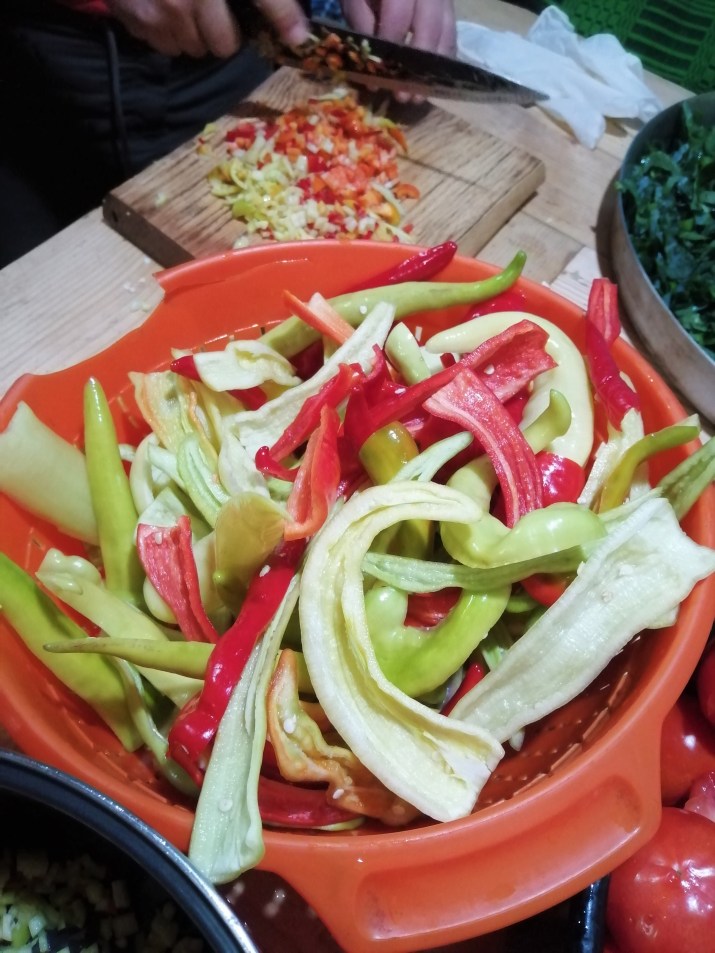
Living close to nature, in the hills of Boževce, put us in the front line to witness this marvelous expansion, and to enjoy it. Amongst the green leaves that are shaping the garden since May (collard greens, chards, kales, nasturtium), were growing tomatoes, peppers, eggplants, beans, potatoes, chickpeas, pumpkins… What a nice feeling to collect all of them, to appreciate the yield of our work and care in the garden during the last months! There is, of course, plants that could have grown better, such as potatoes or cucumbers, but I think we learned a lot thanks to these failures and they’ll help us improving and planning better the garden for the years to come. For now, we’ve had enough vegetables (in addition to eating them directly) to store them for winter, to make salsa (a delicious tomato sauce), kimchi from kale and collard greens and tabasco from our spicy peppers, that came to align with the jars and bottles of hunter salad, ajvar, pickled paprika and cucumbers, we made from vegetables we bought.
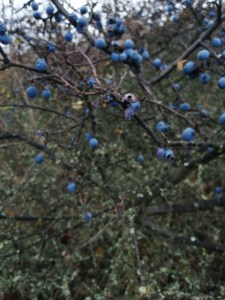
Besides the plants we grew, we also have the great chance to be surrounded by wild trees and bushes that produced fruits and berries in abundance this year; thereby, we collected berries full of vitamins to dry for tea, such as rosehips, hawthorn, and blackthorn (with which we made an exquisite juice and a tasty liquor too). In October, we got a bit obsessed with brekinja (Sorbus torminalis), a little ball, smooshy and a bit sour, growing on a tree from the sorbus genus, that turned out to be delicious as a jam. Wild apples and pears gave us work too: after picking them up from the ground, we cut, grated and put them in small barrels to make vinegar. We kept and stored the healthiest ones, along with apples and walnuts from our orchard, to have fresh fruits to eat during winter. Some of them ended up with peaches from our neighbor in a big barrel where we left them to ferment and make rakija. The peach tree had so much fruits that we even managed to make few jars of compote and jam. Finally, we mixed all of these wild fruits growing around in a closed barrel with water to make a healthy fermented drink.
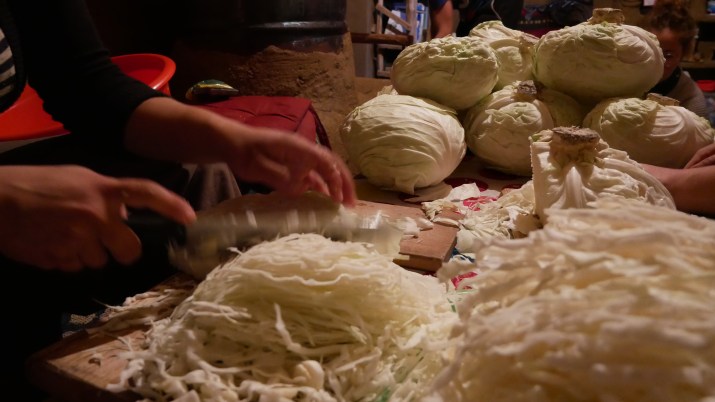
What we could not grow or find around, we bought from neighbors and local farmers. Thus, we spent some nice evenings taking care of the 300kg of cabbage we got, cleaning them, cutting them into thin slices, mixing them with salt, pepper and bay leaves, before smashing them a bit and to cover them with water. We will let them lacto-ferment for few weeks to obtain sour cabbage, a meal that is not only delicious but also full of vitamins and can be kept all winter.
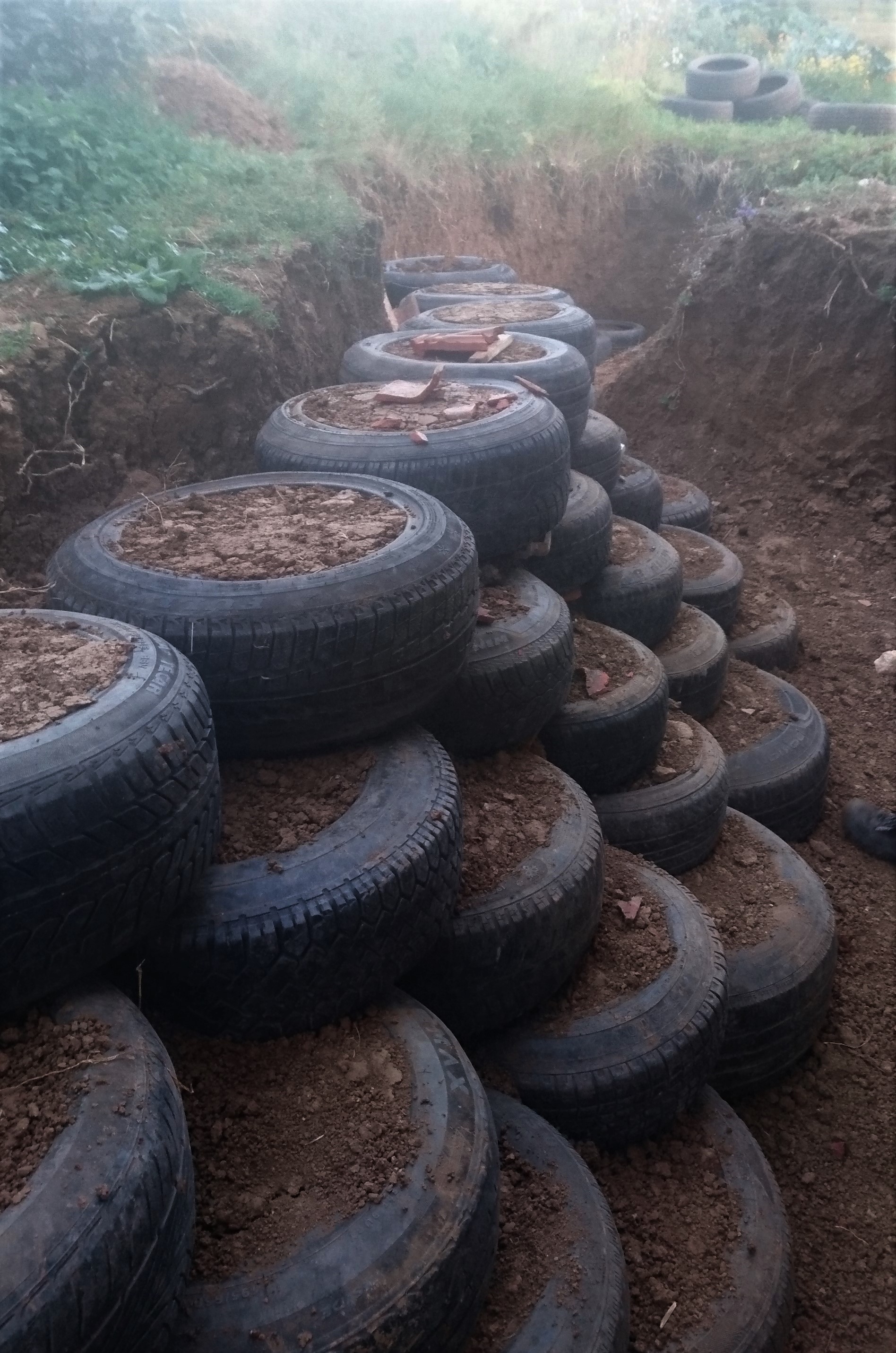
Autumn, with Her profusion, makes us think about the less prolific and tougher days Winter will bring in His frost coat. Preparing food for winter is then an important task to do during this period, but not the only one. Indeed, we worked a lot on the house and its surroundings too, to respond to the Autumn and Winter promises of a cold and humid weather. We worked on solutions to the muddy problems we are facing each time there is rain or snow falling or melting on the property; we started by making a tire wall around the Red House to prevent landslides. The principle is to pile and stagger tires filled with really well compacted soil, so that it becomes a rammed earth brick encased in rubber. This technique is used to build Earthship, self-sufficient houses made out of both natural and upcycled materials, and it is a way to give a purpose to the numerous broken tires abandoned in the forest. After many weeks of work, hundreds of tires carefully chosen, positioned and filled, a few puzzling designing challenges, two mass handles and one spade broken, we finally put, with a tremendous joy, the last tire. After removing the excess soil remaining, flattening and putting pebbles, we now have a nice, mud-free path and space behind the Red House.
Then, we worked on drainages around the houses, using broken tiles and gravels, and we made a brick path between the two houses. The entrance is now very welcoming and nice looking, and it should help us keep our shoes and houses cleaner! Moreover, those colder days to come led us to have big Cut wood – Chop wood – Move wood action days to prepare and store all the wood we will need before warmer days to feed our two rocket mass heaters, the šporet of the kitchen and the two small stoves of the bedrooms. Heating a house with wood is something quite uplifting: it requires physical work to prepare the material, time to light the fire, care and attention to keep it alive and controlled, but you can value differently the warmth you obtain when you know what energy produced it. To be even more efficient in keeping a stable and comfortable temperature in the house, we are also currently working on the insulation of the Red House roof, with OSB planks to hold compacted straw. Humans are not the only ones to get cold in winter, so we built a shelter for our four young geese. With the days getting shorter and colder, we will work much more inside, so Alex, Max and Joseph built new shelves for the workshop. The room is now well organized and we will have a lot of space to continue working and building, even during the dark and freezing winter.
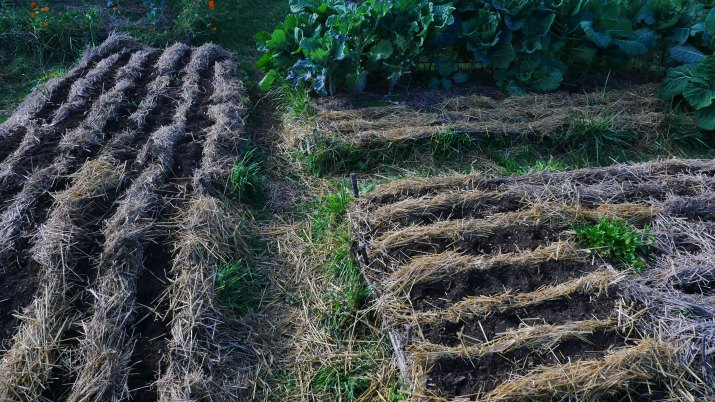
This passage to a new season and the end of the year coming brought some changes in our garden too. Indeed, after removing all the old plants that were not giving fruits anymore, we aerated the garden beds with a broadfork, added humus where it was needed and mulched everything with straw to keep the soil humid and prevent it from freezing. We could then plant, both outside in the garden and in the greenhouses, salads, rockets, chards, parsley, onions, leeks, garlics, holy beetroots, to have them ready in winter and in early spring. This year was really encouraging for us: during summer, we were able to cook mostly with our own vegetables, without having to buy them abroad. Some of our meals were even completely Made in Boževce, with vegetables from our garden, eggs from our chicken, cheese and milk from the neighbors’ cow, wild plants and mushrooms from the forest around… What a beautiful joy it is, when the food you eat is related to so many good moments: planting seeds, with love and a bit of apprehension, watching, day after day, the little cotyledons growing and getting stronger; waking up at 6am to go in the forest with a basket and a knife to hunt mushrooms and finding hundreds of them; going to the neighbors to buy cheese and milk and drink a coffee and a rakija with them; spending a full day, all around the table, speaking and joking and listening to music, to clean, cut, peel, bake, dry, pickle, smash (…), mushrooms, paprikas, tomatoes, cucumbers, cabbages, mušmula (Mespilus Germanica), plums, peaches…
Therefore, to reach more food autonomy, and bring more life and happiness in our plates/stomachs, we expanded the garden by building new beds in the Forest Garden: step 1 – define and design where to put the new beds step 2 – aerate the soil step 3 – put wet cardboard on it (to prevent grass to grow) step 4 – add cow manure (for yummy nitrogen elements) step 5 – mulch with straw (for plant-building carbon elements and to protect the soil from drying, freezing, or being invaded by grass)
We will be able to plant and grow things there in spring, largely from our own seeds, that we kept, organized and stored preciously. And to be sure that our seedlings will have all the nutrients they need, we started a new hot compost pile, that should be turned by billions of astonishing micro-organisms into magnificent humus within a month. Otherwise, the fruiting season being over and the soil being not frozen yet, it was a good moment to replant on the South edge of the Forest Garden wild little trees and bushes growing around to make a windbreaker and thus protect the garden beds. Some of them were also replanted in the chicken area, for our beloved birds to have more shelters against wind, rain or sun.
Last but not least, Autumn, with her ephemeral and misty gown, woven with the shimmering colors of falling leaves and burning skies, of scarlet berries and appetizing fruits, gave us quite some matter to contemplate Nature’s wonders and to appreciate our luck to be able to witness such beauty and to live such moments. The gladness of these moments got even increased when shared: we hosted some GAIAns for a weekend, gathered around a kazan (to bake rakija and potatoes in amber) and around our drugi Tito, who left Boževce after one year of volunteering. We said goodbye to our friend Tito, but we also welcomed a new volunteer, Joseph, whose serenity and building skills are really appreciated, and we had the great joy to see Max, not-so-new in Boževce, coming back amongst us for a new volunteering. Thanks to our workshop on plastering with natural material (mud, straw and sand), we met and worked with fascinating and passionate women, such as Ružica, who is an expert in natural building and a great teacher!
To put it in a nutshell, Autumn gave us a lot to do and experience, physically, emotionally and spiritually. Full of these enrichments, we are ready to welcome Winter!
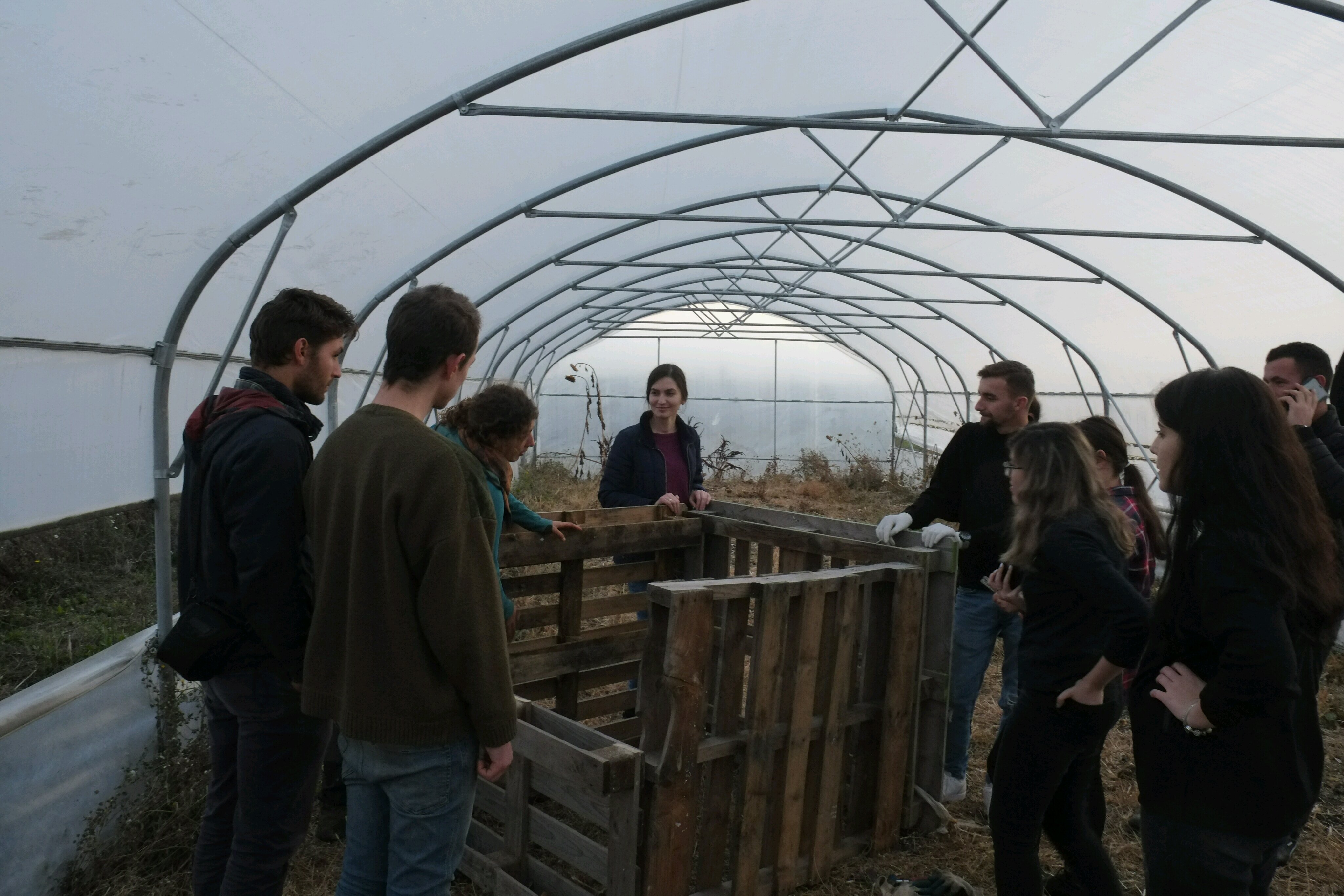
What Permaculture is ? And how do we make good compost ? Last week of November, Bozevce team answered to this questions in front of some student of UBT Camp in Lipljan during a workshop about the compost.
It might look easy to make compost pile, just to put some material and wait, but actually there is some way to decrease the time of composting and this what we explained.
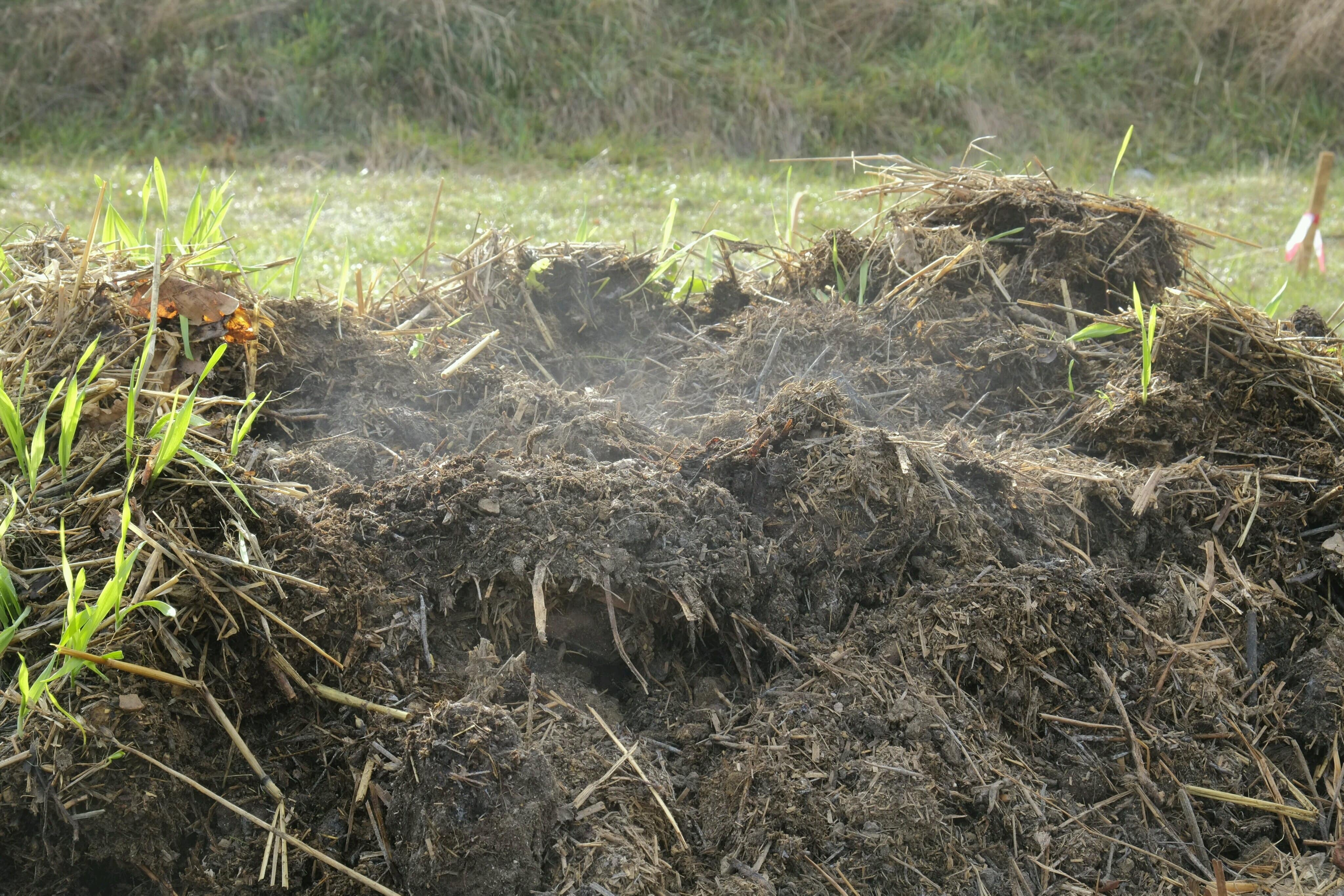
Firstly, if we want to have a quick compost, we have to respect a ratio between the materials. We 30 % of carbonic material wich are :crushed banches, leaves, herbivorus manure, ashes, cardboard and natural tissue. With 70 % of nitrate material which are kitchen waste, vegetables, fruits and gardening waste, needles, weed. We have to make a pile with the different ingredients we have. There is a other things very important for the compost, the oxygen The micro organism inside the compost need oxygen to consume the waste into compost. That’s why we need to turn the compost pile every 2 days. We also need a bit of water, and to put a nylon on the pile to keep the warm inside and avoid evaporation.
During the first days, we can reach between 50-70 degree inside the compost. We can even seen steam of water when we turn it. Then it will decrease to 40-50 degree and will be ready around 1 month.
Well it was the theory part of the workshop, the objective of this workshop was also to set up this kind of compost in Lipjan campus in order to have good soil for gardening. We didn’t had enough material to make a pile right now, but we built a place where we can put and gather the every day kitchen waste from the cafeteria. It will reduce the amount of trash of the campus. Once they will be a good quantity of material, they will be able to start . For the construction, we used some wood palette to make the compost place. Everyone took part of the construction. With the help of the student we quickly achieved it.
Thanks you a lot for having hosting us and for made this workshop as fun as it was.



















 Permaculture as a Path to Peace