


Mammals. We are mammals. Most of the most famous animals are also mammals. Lion, Elephant, Whale. But also Bear, Wolf and Bison in Europe. We all know these emblematic species. What is less well known is that there are 6400 species of mammals throughout the world, and that most of these species are rodents (rats, mice, voles, 2500 species) or bats (1400 species).
Mammals are characterised by the presence of milk-producing mammary glands for feeding their young and the presence of fur or hair. Most of mammals are quadruped (walking with four legs), but in some, during the process of evolution, the limbs have been transformed to be adapted for life at sea (fins of dolphins and whales), in the air (wings of bats), in trees (prehensile tail and bipedal locomotion) or underground (digging forelimbs of moles). Mammals range in size from the 30–40 millimetres bumblebee bat to the 30 metres blue whale.


A mammalogist, a member of a very common species of mammal, Humans (Homo sapiens), photographed by a camera trap, a very useful device for studying mammals.
Many mammals are highly intelligent, with some having large brains, self-awareness, and the ability to use tools. They communicate and vocalize in various ways, such as through ultrasound, scent marking, alarm calls, singing, echolocation, and, in humans, complex language. Mammals can form different social structures, including fission-fusion societies, harems, and hierarchies, but they can also be solitary and territorial. While most mammals are polygynous, some species are monogamous or polyandrous.
The domestication of various mammals by humans was a key factor in the Neolithic Revolution, leading to the shift from hunting and gathering to farming as the main food source. This transition prompted a major change in human societies, moving from a nomadic to a sedentary lifestyle, fostering greater cooperation among larger groups, and eventually giving rise to the first civilizations. Domesticated mammals have long been vital, providing power for transportation and agriculture, as well as sources of food (meat and dairy), fur, and leather. They are also hunted and raced for sport, kept as pets and working animals, and used as model organisms in scientific research. Mammals have been featured in art since the Paleolithic era and continue to appear in literature, film, mythology, and religion.

However, many mammals species face population declines and extinction, primarily due to hunting and poaching and habitat destruction and fragmentation, especially deforestation. 80 mammal species have gone extinct since 1500, and the total biomass of wild mammals has declined by 82 per cent since the beginning of human civilisation. Wild mammals now represent only 4% of the total mammalian biomass on earth, while humans and their domesticated animals make up 96%!

270 species of mammals inhabit Europe. Mammals are poorly known in Kosovo. Based on the existing studies and literature, only 46 mammal species are known in Kosovo. The number of mammal species living in Kosovo is probably much higher. For example, 82 species of mammals are known from North Macedonia, 75 from Albania and 96 from Serbia.
Among these 46 species known from Kosovo, 39 were evaluated by the Red Book of Fauna of the Republic of Kosovo. These 39 species are also protected. Mammals are considered as flagship species: they are beautiful and famous, meaning that people are more willing to protect deers than to protect an insect for example. Their protection can then benefit other species. In fact, some mammals are considered as “umbrella species”. Protecting these species indirectly protects the many other species that make up the ecological community of its habitat (the umbrella effect). Mammals are very sensitive to disturbance and to the destruction of their habitat and they often need a large area to live. Therefore, protection of the mammal species offers protection to other species that share the same habitat.
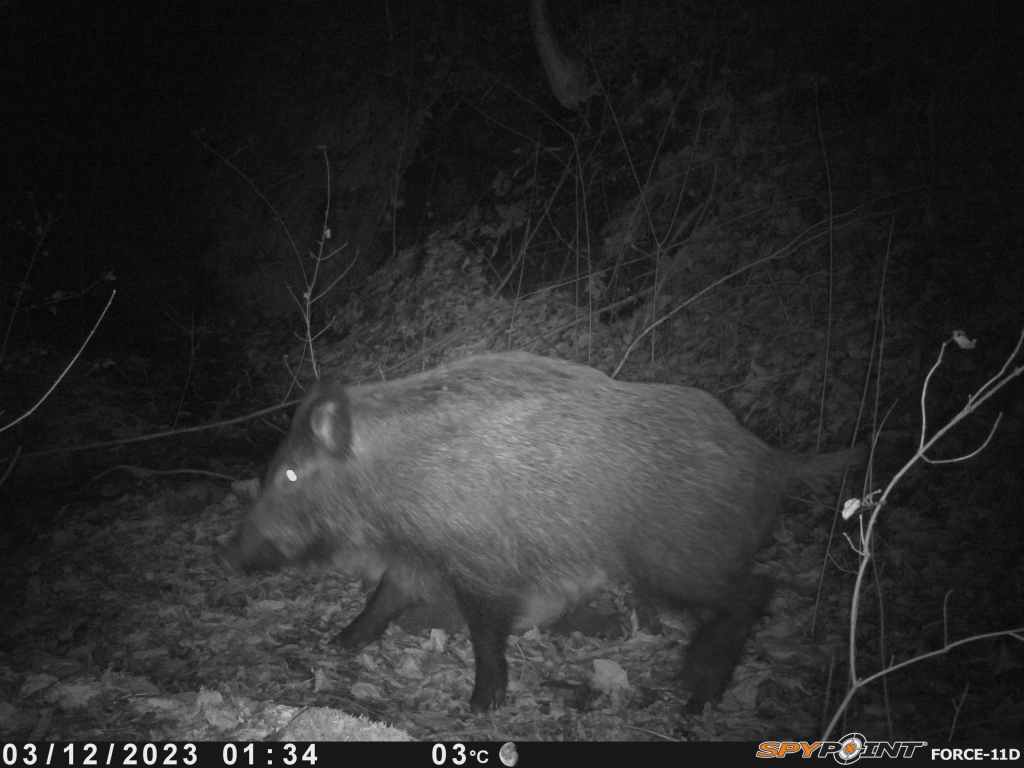
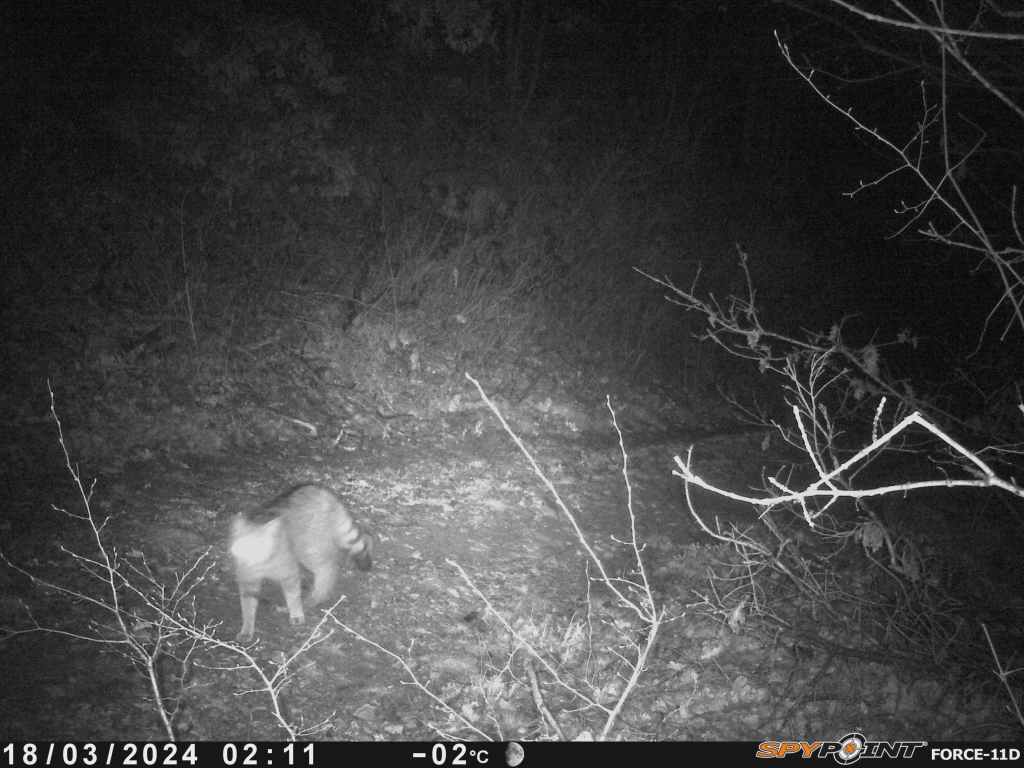

Wild boar (Sus scrofa), Wildcat (Felis silvestris) and Stone marten (Martes foina) were all detected in Bozevce using camera traps and not seen otherwise
Mammals are very secretive and are therefore difficult to study. Mammalogists (scientists who study mammals) use different tools to study them: non-lethal traps for rodents and shrews, camera traps, footprints and droppings, or even acoustic recorders to detect bats.


Droppings of otter are easy to recognize and one of the best way to detect this very elusive species. They contain bones of fish and pieces of crayfish, and the smell is not unpleasant, some people comparing to the smell of honey. Footprints are also an important mean for studying mammals.
As I didn’t have neither traps nor acoustic recorders, my inventory of mammals of Boževce is far from exhaustive: just one bat and three rodents were observed. In total, 16 species were observed, it is likely that at least double the number of species are present.
Carnivores are well represented in Boževce: wolves were observed twice (with a maximum of 4 individuals), and some pictures were also taken by a camera trap. Badger, fox, stone marten and wildcat were also detected with the camera trap. The presence of the otter was confirmed by the findings of droppings. Unfortunately, the river where the otter was present was damaged by regulation work and this modification of its habitat make it way less suitable for the otter. Otter and Wildcat are both considered as Near Threatened in Kosovo because of the destruction/modification of their habitat. Squirrel and dormouse were observed in the trees around our property. Wild boar and roe deer were also detected by camera trapping and are probably quite rare. Roe deer is considered as Endangered in Kosovo and is threatened by poaching. The European hare is quite common in Boževce. Finally, few small mammals species were observed, mainly after cat depredation: Northern white-breasted hedgehog, Black rat, European mole, Lesser blind mole-rat and Kuhl’s pipistrelle.
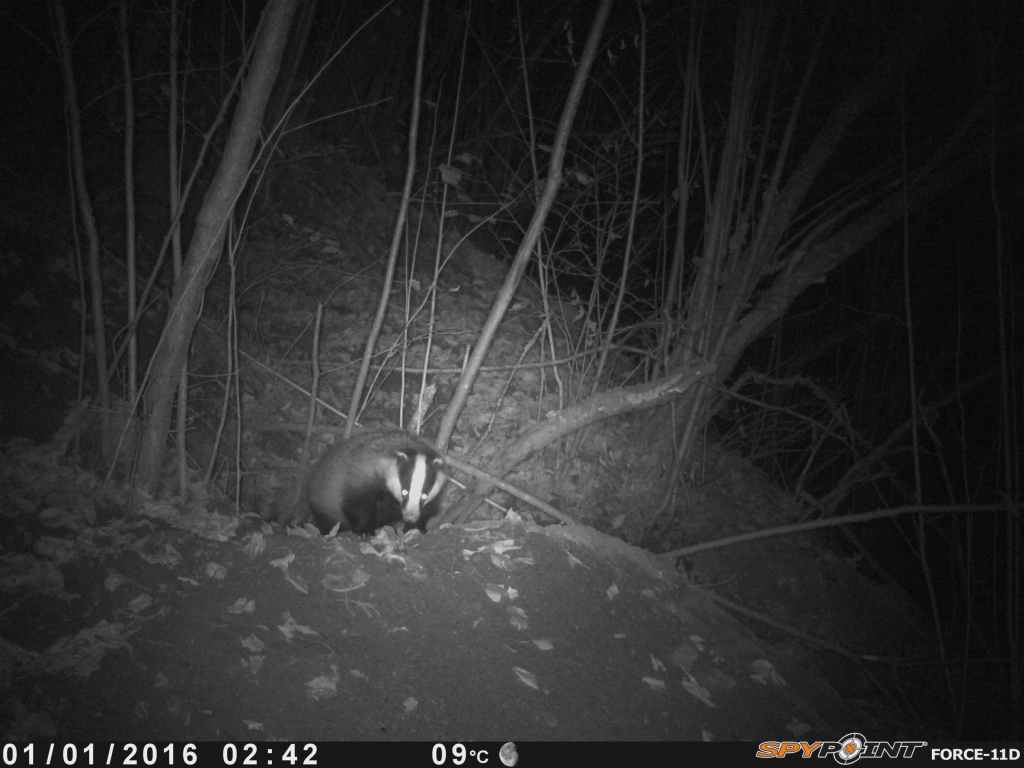


Badger (Meles meles), Wolf (Canis lupus) and Fox (Vulpes vulpes), species found in the forests of Bozevce
The lesser blind-mole rat is a peculiar underground rodent, which looks like a mole. It spends most of its life underground building complex tunnel systems, eating tuberous shoots during the night (potatoes, onions, carrots, parsley…). Because of these feeding habits, the blind-mole rat is considered as an agricultural pest and was and is still being persecuted. These persecutions and the loss of lowland meadows and pastures, its habitat, because of agricultural intensification, are threatening this species. For example, whilst once very common in Croatia, this species went extinct in Croatia in 1984. A small population was discovered in 2023 and is now carefully managed and protected. In Boževce, while lesser blind-mole rats are taking their due on our carrots and other veggies, we leave them in peace and they are still thriving in our garden.
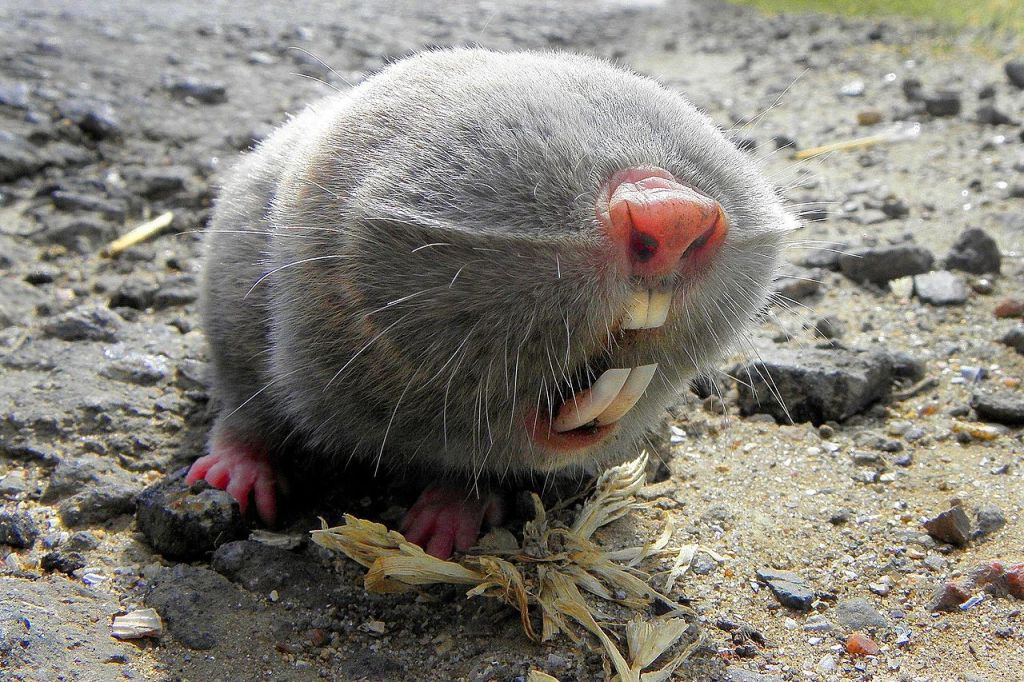
Our garden and Boževce are probably home to many other species of rodents and bats… but we have yet to find them !
 Permaculture as a Path to Peace