

They announce spring, are seen as messengers or symbolize peace, freedom or majesty; some are appreciated singers while others are unloved and considered pests; raised or hunted, they are sources of food, but also of feathers and fertilizer: birds leave no one indifferent and are everywhere, in our cultures and in our lives.
Birds are also known for their formidable migratory abilities: when winter comes, many species travel thousands of kilometres to reach their wintering area, where they will find much more favourable climatic conditions, but above all, food in quantity.


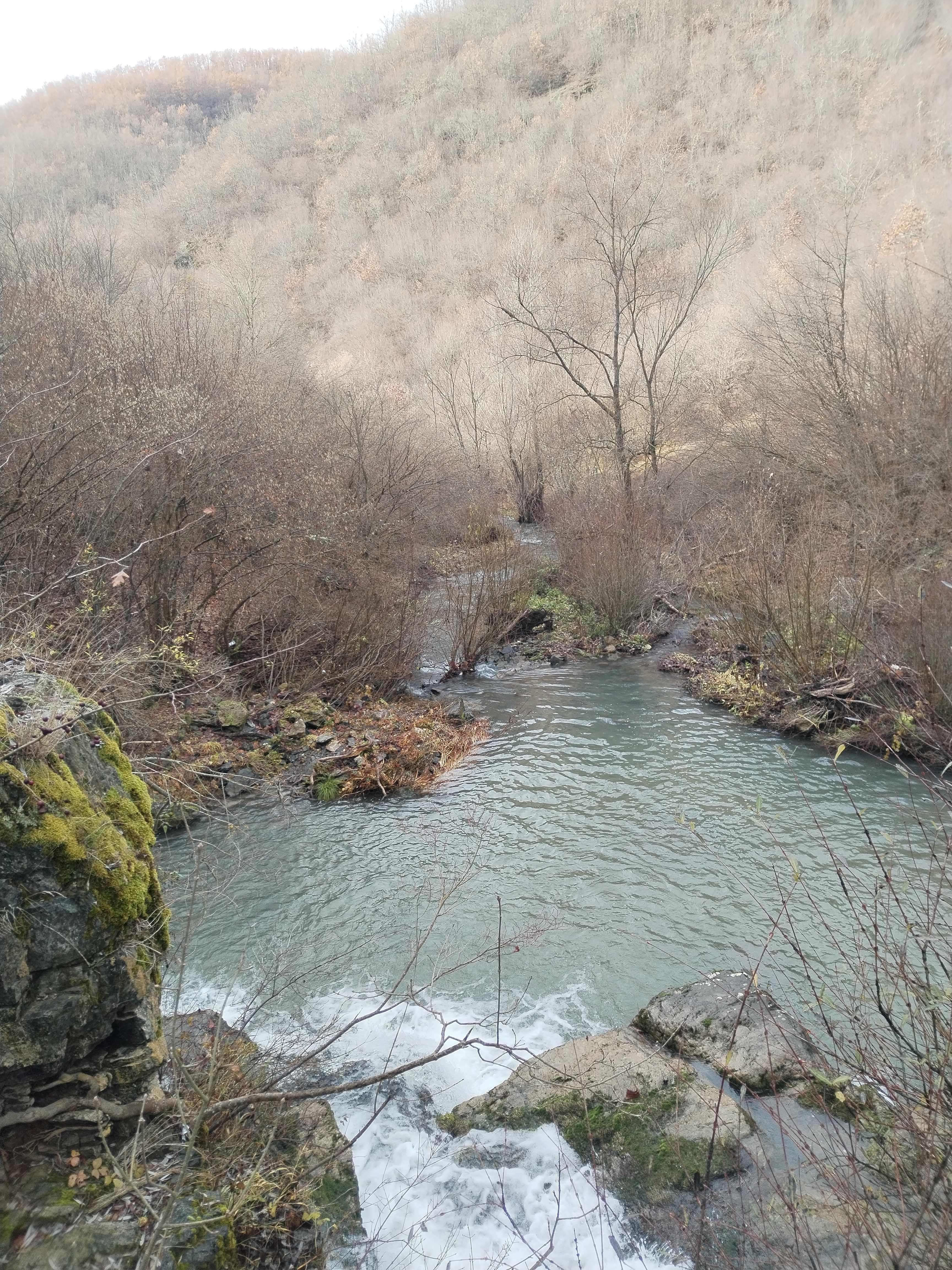
Birds’ habitat in Bozevce : rocky outcrops and oak forest, grasslands, and river
Birds, through their diversity and abundance, have enormous ecological importance. Indeed, they fulfil many ecological roles: scavengers prevent the spread of diseases by consuming carcasses, many nectarivores species contribute to the pollination of plants, while granivores participate in the dispersal of seeds, and insectivorous birds contribute to the regulation of populations of insects considered harmful to agriculture (Mariyappan et al., 2023).
Despite their importance, birds are subject to many threats. About 129 species of birds have already become extinct since 1500, and more than 1000 other species disappeared during the colonization of Melanesian, Polynesian, and Micronesian islands. Today, 1500 species are listed as threatened by the International Union for the Conservation of Nature (IUCN), or 14% of the total. Many bird populations, even from common species, are declining worldwide. Threats are diverse: habitat loss is probably the most important one, but birds are also threatened by overhunting, pollution, invasive species and climate change (Norris & Pain, 2002).


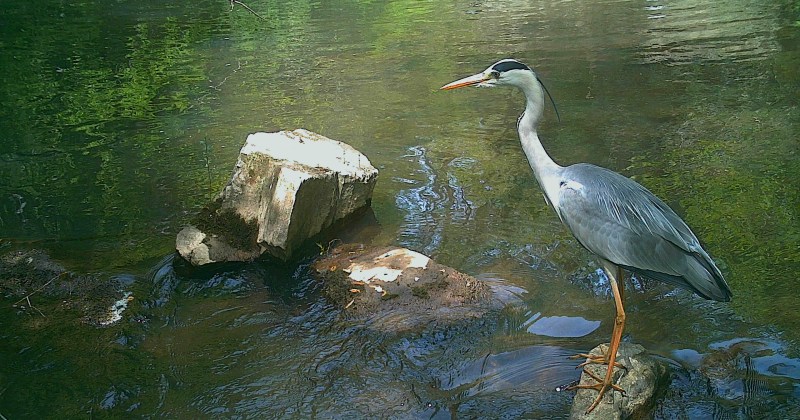
Kingfisher (Alcedo atthis ; Andreas Trepte, CC-BY-SA) and grey heron, two species threatened in Kosovo and present in Bozevce
During the inventory of Bozevce biodiversity, 108 species of birds were observed. More than 1000 data were entered on the observation.org database. These significant figures are linked to the diversity of habitat present in Bozevce: oak forests are home to warblers and tits, insect-rich meadows attract bee-eaters (Merops apiaster) and hoopoes (Upupa epops), and buntings and quails (Coturnix coturnix) nest there. Fish-filled rivers are the breeding ground for mallards (Anax platyrhinchos) and dippers (Cinclus cinclus) and the favourite fishing area for the kingfisher (Alcedo atthis) and grey heron (Ardea cinerea), two species protected and considered as threatened in Kosovo. Old houses are appreciated by swallows and sparrows for nesting, scrubby areas are the domain of shrikes and warblers, while rocky cliffs are the habitat of the raven (Corvus corax), the eagle owl (Bubo bubo) and the crag martin (Ptyonoprogne rupestris).

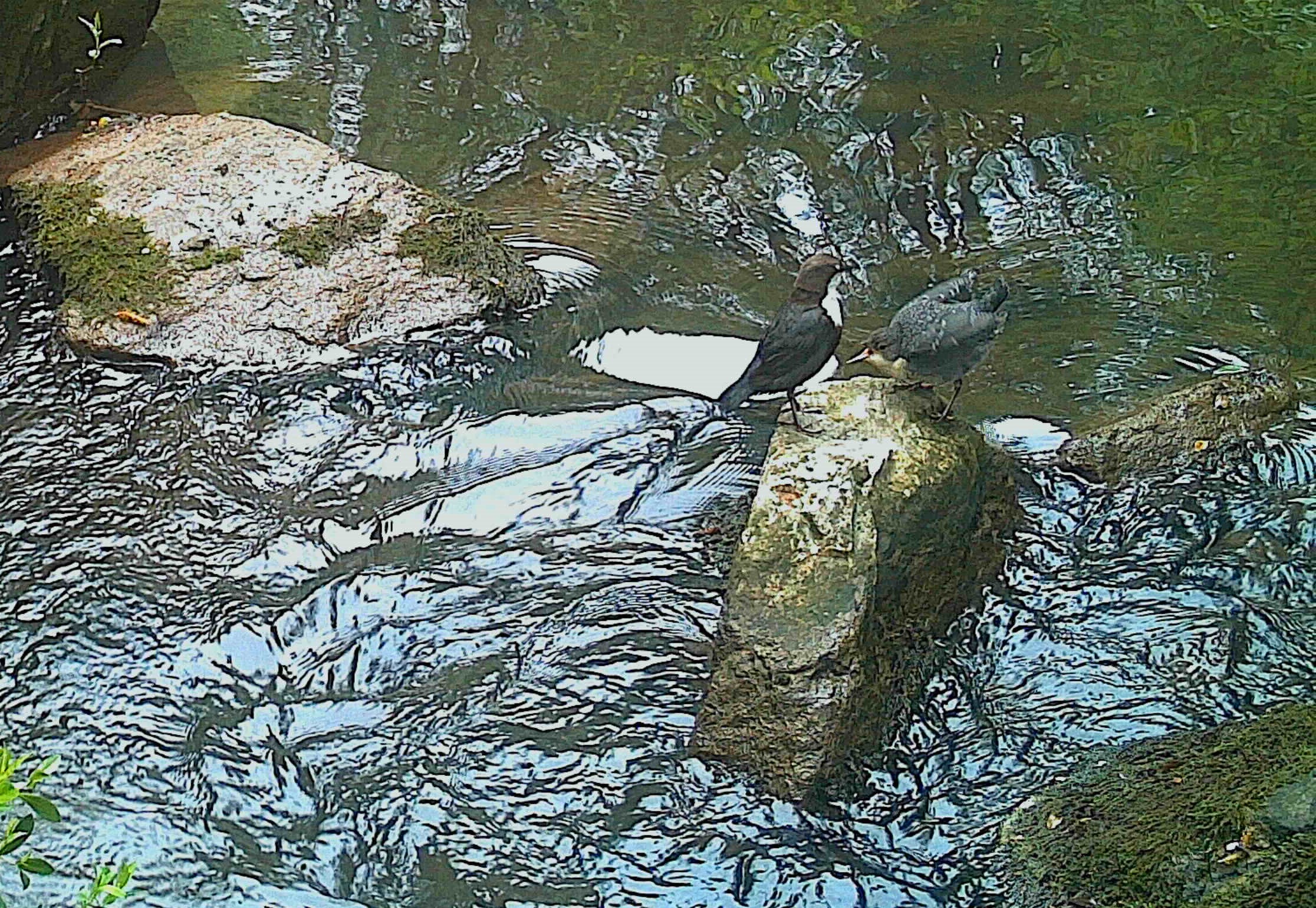

The camera trap, as nice tool to capture rare or elusive birds : common raven (Corvus corax), dipper (Cinclus cinclus) and common sandpiper (Actitis hypoleucos)
It is difficult to prove with certainty that a species nests in a specific place, except when we observe the nest, nestlings or an adult carrying food, However, based on the frequency of our observations, the existing habitats, and our knowledge of the biology of the species, we have estimated that the number of nesting species is around 55 species. While about twenty of these species migrate (such as the wryneck (Jynx torquilla) or the woodlark (Lullula arborea)) and spend the winter in more southern regions, about 35 (such as the nuthatch (Sitta europaea) or the sombre tit (Poecile lugubris)) are present all year round in Bozevce. With fifteen more species (including the brambling (Fringilla montifringilla) and the woodcock (Scolopax rusticola)) coming to us from northern and central European regions, there are about 50 species that spend the winter in Bozevce. Among the occasional species (about a dozen species), not nesting in Bozevce but sometimes making an appearance there to feed, we find the common swift (Apus apus) and the hobby (Falco subbuteo). Finally, there are about 25 migratory species that just pass through Bozevce during their migration. Some, such as the wood warbler (Phylloscopus sibilatrix) or the whinchat (Saxicola rubetra), spend a few days there, and use the opportunity to feed and regain strength for the rest of the journey. Raptors, on the other hand, such as the osprey (Pandion haliaetus) or the merlin (Falco columbarius), only fly over Bozevce during their migration. This is the case for 6 of the 14 species of raptors observed in Bozevce!
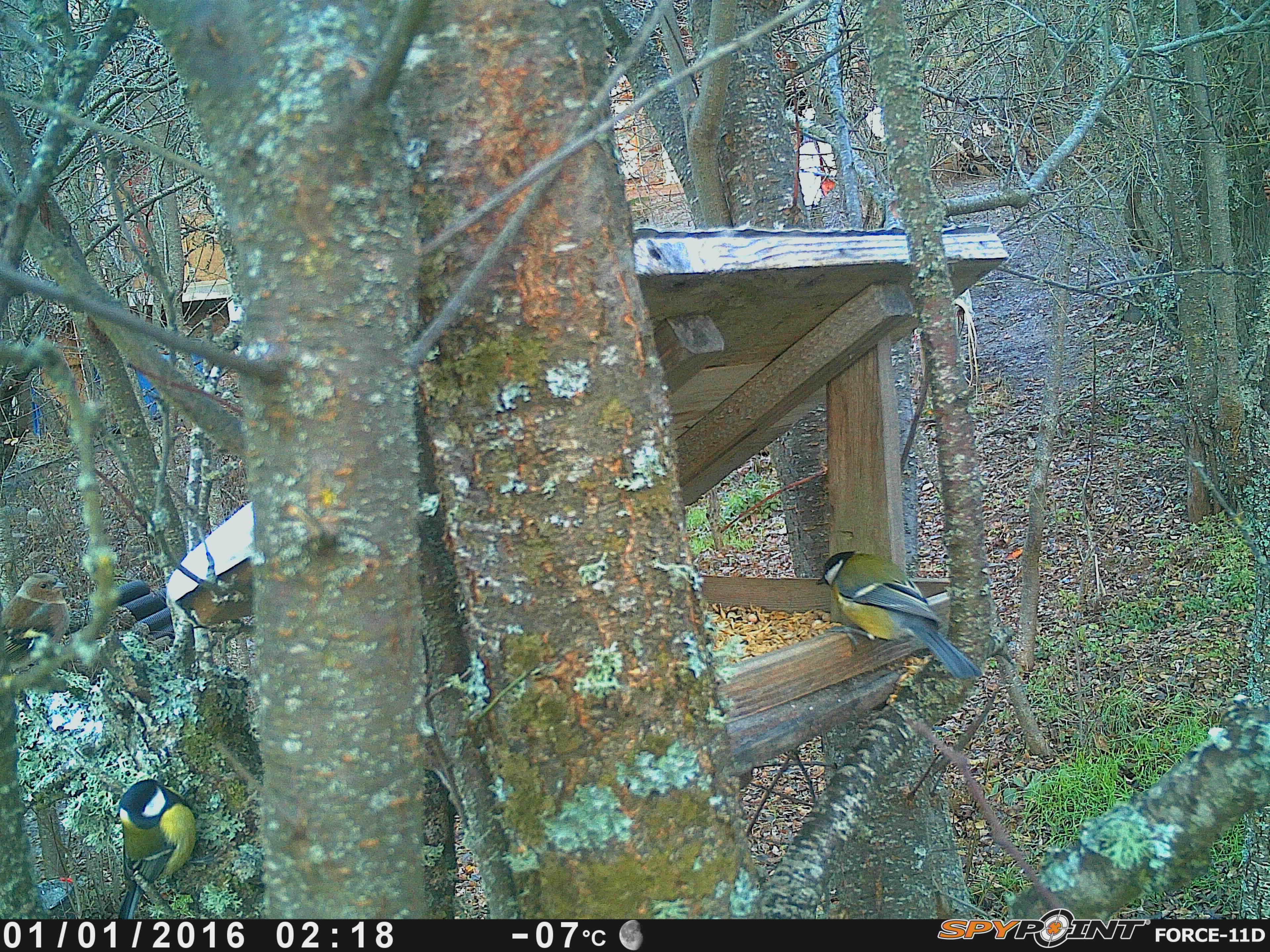


Chaffinch (Fringilla coelebs) and great tit (Parus major), jay (Garrulus glandarius) and eurasian tree sparrow (Passer montanus), 4 very common species on our property !
Source:
Mariyappan M., Rajendran M., Velu S., Johnson A. D., Dinesh G. K., Solaimuthu K., Kaliyappan M., Sankar M., 2023.- Ecological Role and Ecosystem Services of Birds: A Review. International Journal of Environment and Climate Change, 13 (6): 76-87. https://doi.org/10.9734/ijecc/2023/v13i61800.
Norris K., & Pain D. J., 2002. Conserving bird biodiversity: general principles and their application Cambridge University Press: 337p.
 Permaculture as a Path to Peace