


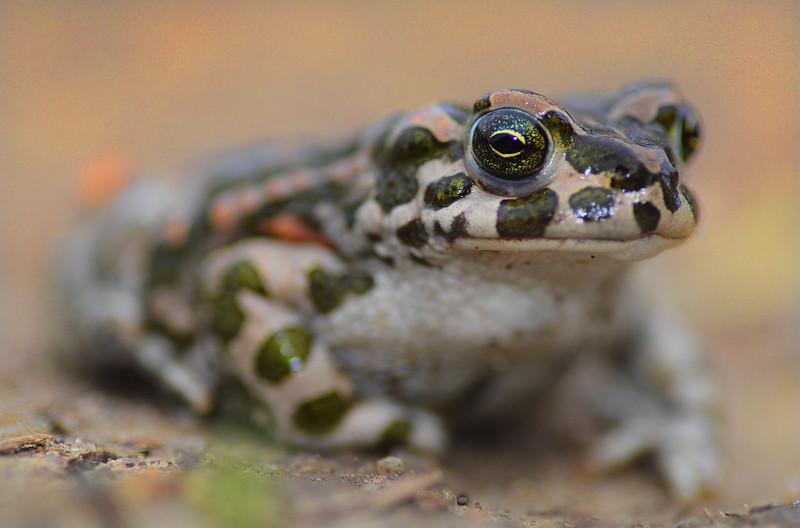
In a previous article, I presented to you the different species of amphibians present in Bozevce. Since then, I found one more species: the Green Toad (Bufotes viridis). While we were removing the old layers of paint in one of our basements, a Green Toad appeared in the rubble! This species likes warm and arid regions with sandy soil where it can excavate burrows to hide during the day. Not exactly the kind of soil that we have in Bozevce, but this toad finds another cool place!
And now, it’s time to talk about reptiles! Reptiles include turtles, crocodiles, snakes and lizards, and are characterized by a scaled skin. What we call traditionally “reptiles” are not a “proper group” scientifically: they do not form their own branch in an evolutionary tree and share a common ancestor with birds. For example, crocodiles are more closely related to birds than to lizards!
Today, more than 10 000 species of reptiles are known in the world. Most of them live in tropical areas. In fact, reptiles are ectotherms: they cannot regulate their body temperature and rely completely on environmental warmth to maintain their preferred temperature. Living in colder habitats is therefore challenging for reptiles, and only a few specialized species live on mountain tops or at higher latitudes.
Kosovo is a very biodiverse country for reptiles. Out of the 120 species that inhabit Europe, 22 are known to live in Kosovo. Two main reasons can explain that. The diversity of habitats is important in Kosovo, thanks to variation in geology, elevation (from lowland to high mountains), and climate (from Mediterranean to continental climate). The other reason is historical: during the last ice age, the southern Balkans was one of the few areas (with Italian and Iberian Peninsula) in which species took refuge when northern climates were too cold for them to persist. Today, these climatically more stable areas still host a relatively large number of species.
In the middle of this biodiverse Balkan peninsula, is Bozevce also rich in reptiles? Yes! I observed 12 species there. Bozevce’s diversity of habitats is very favourable for reptiles: meadows, grassy slopes, shrublands, forests and their edges, rocky outcrops… There, reptiles can find food, shelters, and a large choice of micro-habitats (stones, shady places…) to manage their body temperature according to their preferences.
Quite common in Bozevce are the Hermann’s Tortoises (Testudo hermanni), that I observed often basking or grazing in paths and small roads. I even observed a female digging in the ground to lay her eggs. However, I did not observe a single juvenile, only turtles appearing quite old (their shells are often damaged). This could mean the population fails to reproduce or the young fail to reach adulthood. This worrying observation is shared in Kosovo where the Hermann’s Tortoise is considered Near Threatened and declining, in the Red Book of Fauna.

Lizards are very abundant and diverse in Bozevce. I observed 5 of the 8 species known in Kosovo. The Eastern Green Lizard (Lacerta viridis) is the biggest of these 5 species. The other four species, Common Wall Lizard (Podarcis muralis), Erhard’s Wall Lizard (Podarcis erhardii), Balkan Wall Lizard (Podarcis tauricus) and Meadow Lizard (Darevskia praticola) are of similar size and difficult to distinguish from each other. Balkan Wall Lizard, who likes warm habitats with low vegetation, and Meadow Lizard, who contrary to his name, inhabits open oaks forests, are both considered as Near Threatened on the Red Book of Fauna, and are threatened by the fragmentation and destruction of their habitats. On the other hand, Erhard’s Wall Lizard is assessed as Data Deficient, due to the scarce knowledge about its distribution and population trends.

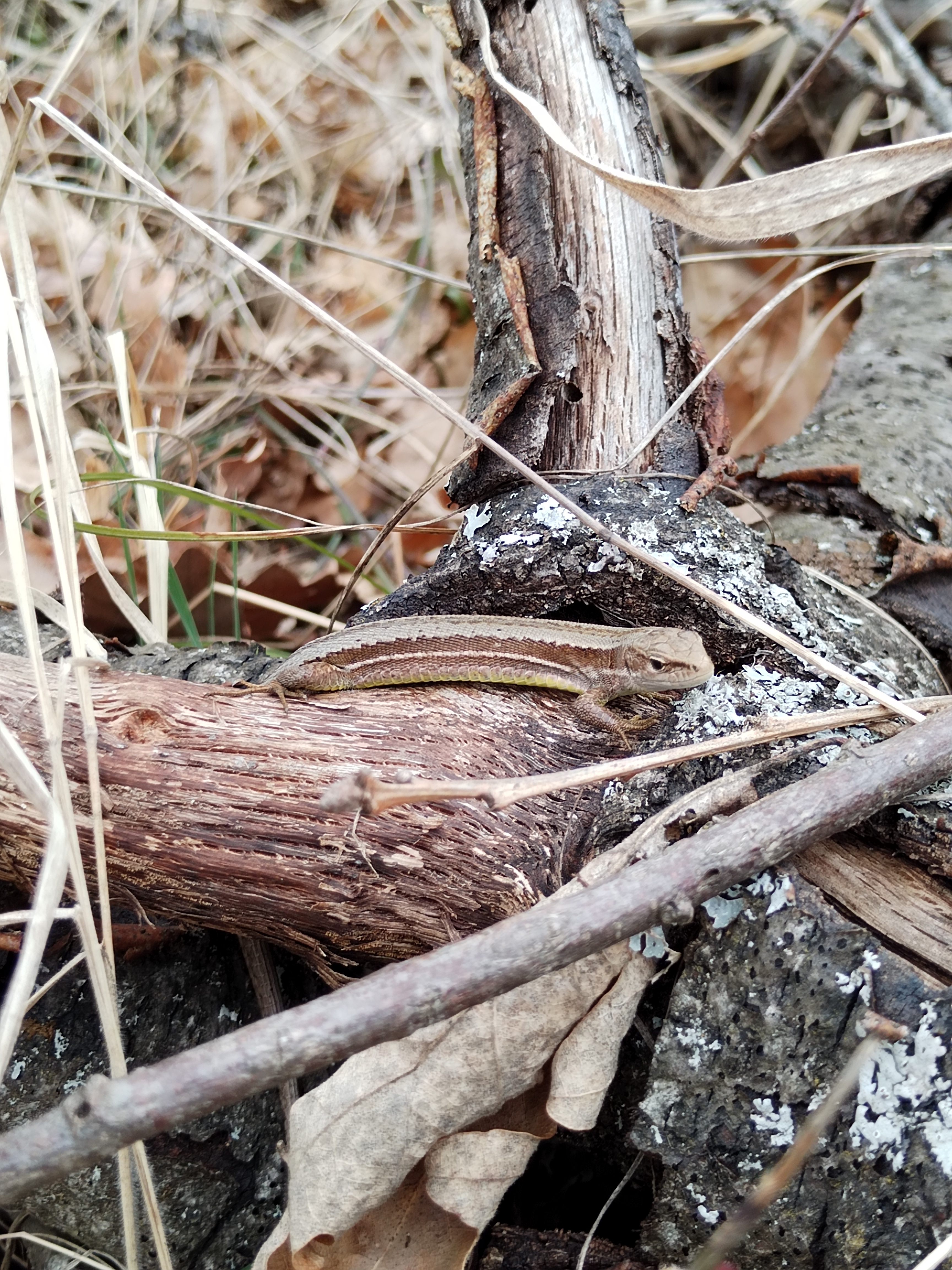


Top-left : Eastern Green Lizard. Top Right : Meadow Lizard. Bottom left : Erhard’s Wall Lizard (©Agathe Chalopin). Middle Right : Common Wall Lizard (CC-BY-SA, Bernard Dupont). Bottom Right : Balkan Wall Lizard.
The Snake-eyed Skink (Ablepharus kitaibelii) is quite common in Bozevce meadows and other grassy places, and I even observed it in our garden! This small species has very short legs and moves swiftly when disturbed by “swimming” in the grass. Considered as Near Threatened in Kosovo, its population is declining due to agricultural intensification.
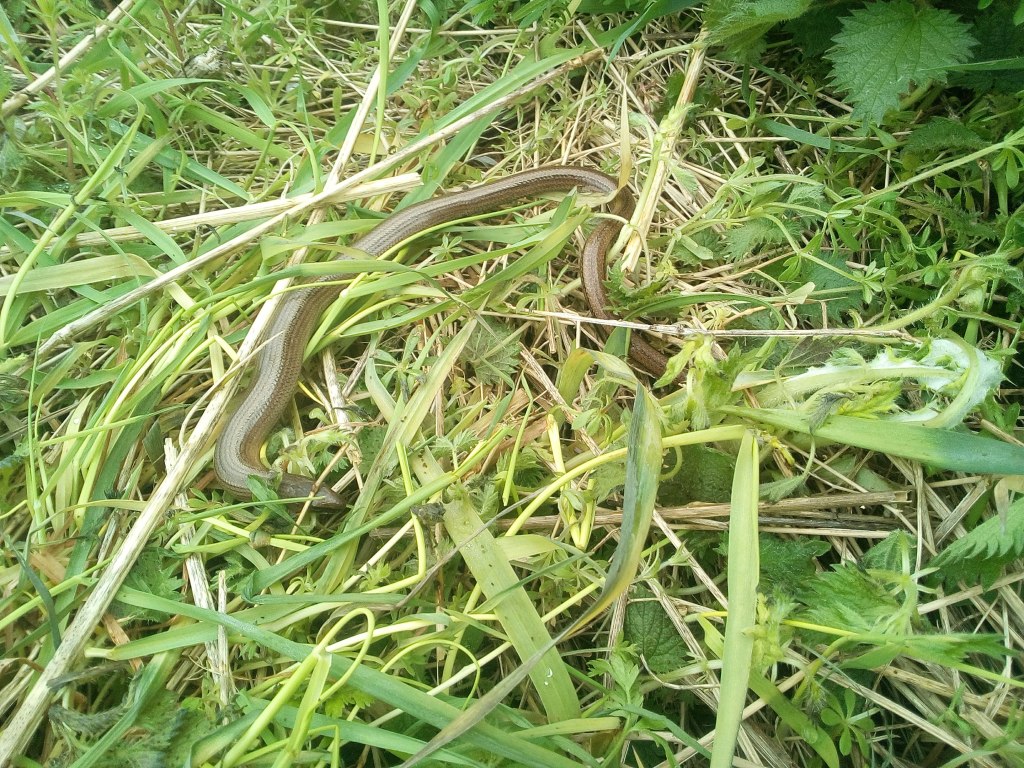
Slow Worms (Anguis fragilis) are also hosts of grassy environments, and contrary to Skinks, don’t have legs anymore. However, they are closer to lizards than to snakes, and useful for the gardener, feeding mainly on slugs and worms.

And finally, snakes! I observed 4 species until now in Bozevce, but I expect a fifth one to be present.
The Grass Snake (Natrix natrix), also known as Water Snake, is a species that likes wetlands and feeds mainly on amphibians. However, this species is not very demanding and can also feed on fish and rodents, and live in gardens, grasslands and open woodlands.
The Smooth Snake (Coronella austriaca) is an elusive species that inhabits drier environments than the Grass Snake, like heathlands or rocky grasslands. This quite small species (adult length is about 70 cm) feeds mainly on lizards.
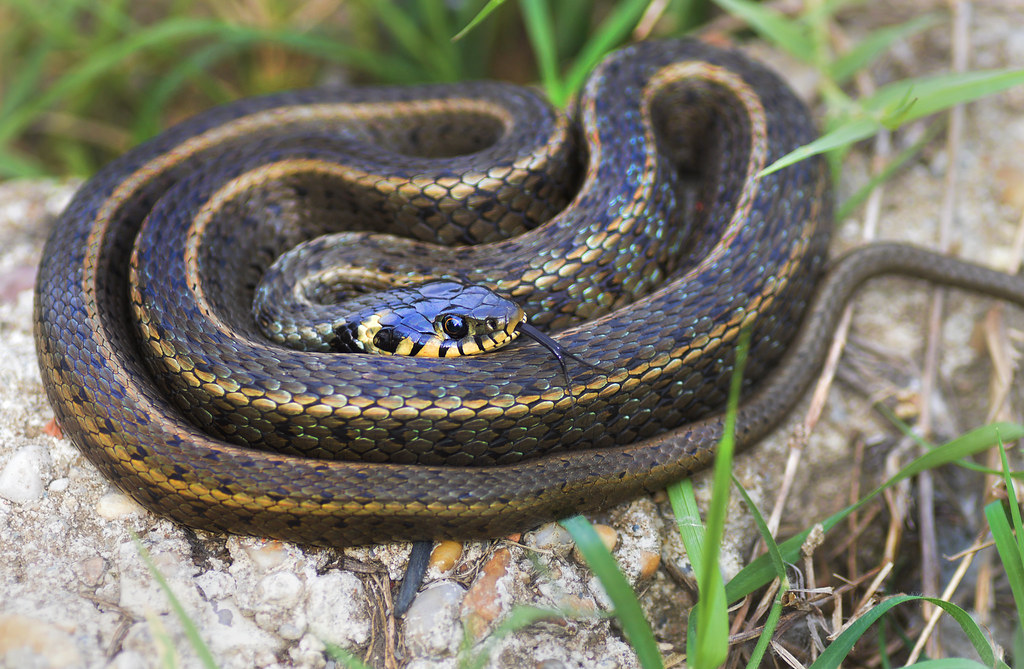

These two species are both classified as Near Threatened in Kosovo and are endangered by the degradation and destruction of their habitats, but also by direct persecution. In fact, snakes are still feared by many people and victims of their bad reputation. Nevertheless in Europe, most snakes are totally inoffensive, and anti-venoms exist in case of bites of vipers (which are the only “dangerous” and venomous snakes in Europe). However, vipers rarely bite and are not aggressive.
Speaking of Vipers, Nose-horned Viper (Vipera ammodytes) is most likely present in Bozevce, even if I didn’t observe it yet. This small species (usually up to 65 cm) lives in the Balkans and part of Turkey. This species feeds mainly on rodents and lizards, and inhabits different biotopes, provided there are stones.

And finally, the two last species I observed here are bigger but inoffensive (for humans) snakes: the Caspian Whipsnake (Dolichopis caspius) can measured up to 2,5 m whereas Aesculapian Snake (Zamenis longissimus) can reach 2 m , even if most of the individuals are much smaller. Caspian Whip Snake is a host of warm and sunny habitats, like steppes or scrubland, where it feeds on small mammals, birds and reptiles. Aesculapian Snake is an agile climber and uses this skill to hunt birds and mammals on shrubs and trees. Eggs and juveniles’ birds are also an important prey for this species of forested habitats.

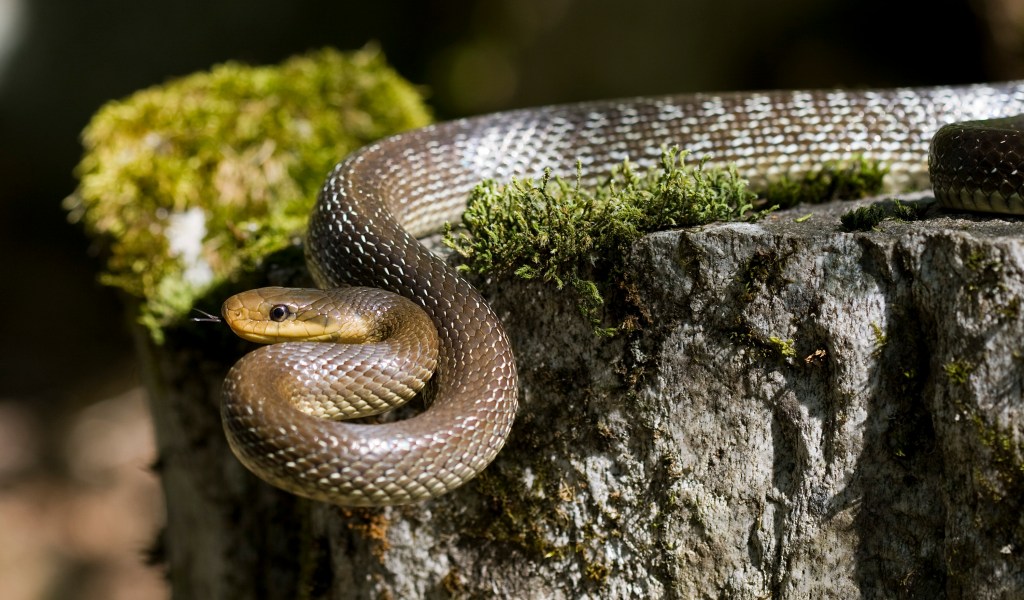
That’s it, for now, for the rich reptile’s fauna of Bozevce! My return to Normandy will be “boring”: there, only 9 species of reptiles live… and none of them in my garden!
| Latin name | English name | Albanian name | Serbian name |
| Testudo hermanni | Hermann’s tortoise | Breshka e zakonshme | Šumska kornjača |
| Lacerta viridis | Eastern Green lizard | Zhapiku i gjelbër evropian | Zelembać |
| Podarcis muralis | Common Wall Lizard | Hardhuca e mureve | Obični zidni gušter |
| Podarcis erhardii | Erhard’s Wall Lizard | Hardhucat e Shqipërisë | Južni zidni gušter |
| Podarcis tauricus | Balkan Wall Lizard | Stepski gušter | Hardhuca e barit |
| Darevskia praticola | Meadow Lizard | Hardhuca e pyllit | Šumski gušter |
| Anguis fragilis | Worm Lizard | Vjeshtull Kakzogeza | Slepić |
| Ablepharus kitaibeilii | Snake-eyed Skink | Zhapi Këmbëvogël | Kratkonogi gušter |
| Coronella austriaca | Smooth Snake | Gjarpri me gushë | Smukulja |
| Natrix natrix | Grass Snake | Gjarpri i madh i ujit | Belouška |
| Dolichopis caspius | Caspian Whipnake | Shigjeta e Gjatë | Stepski smuk |
| Zamenis longissimus | Aesculapian Snake | Bolla e Shtëpisë | Eskulapov smuk |
Source: Halil Ibrahimi, Agim Gashi, Daut Rexhepaj, Ferdije Zhushi Etemi, Linda Grapci Kotori, Zoltán Fehér, Taulant Bino, Lucija Šerić Jelaska, Gabor Mesaroš, Philippe Théou, 2019 – Libri I Kuq I Faunës, Së Republikës Së Kosovës.
 Permaculture as a Path to Peace