
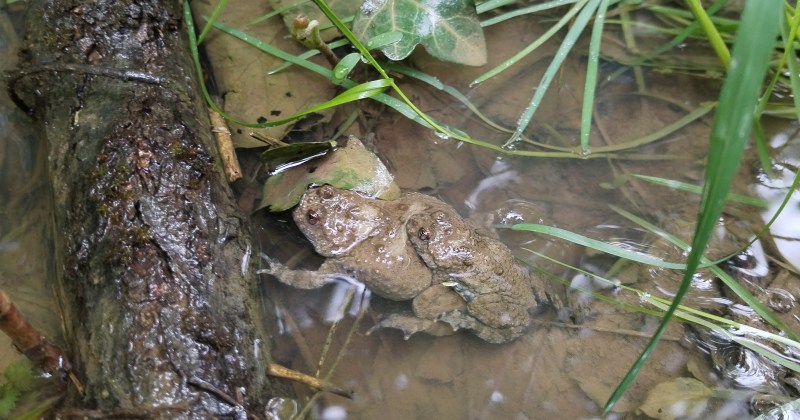

In all my articles so far, I have only talked about birds. However, birds are not my favourite groups of animals! In fact, I love insects and I even worked a few months as an entomologist (specialist of insects). But there is another group that interests me a lot: amphibians. Why? Thanks to my father. He used to work for the French office for water and aquatic environments and is very sensitive to the fate of aquatic habitats, and that of their most emblematic inhabitants: amphibians. With him, and since I was a child, we have been going to count frog clutches, walking in the forest at nightfall to find salamanders, looking for the great crested newt, a fairly rare species, in the ponds in the middle of the fields with the cows keeping us company… We have explored hundreds of ponds around our home (and fall in some of them), and the amphibians of the Pays de Bray, where I live in Normandy, no longer have (too many) secrets for us.
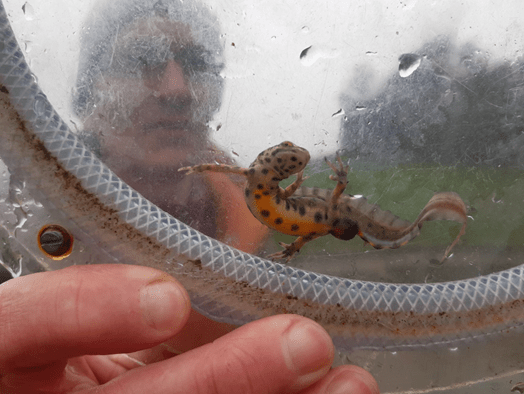
After the Pays de Bray, now it’s time for Bozevce! During my stay here, I will try to inventory the amphibians in the village.
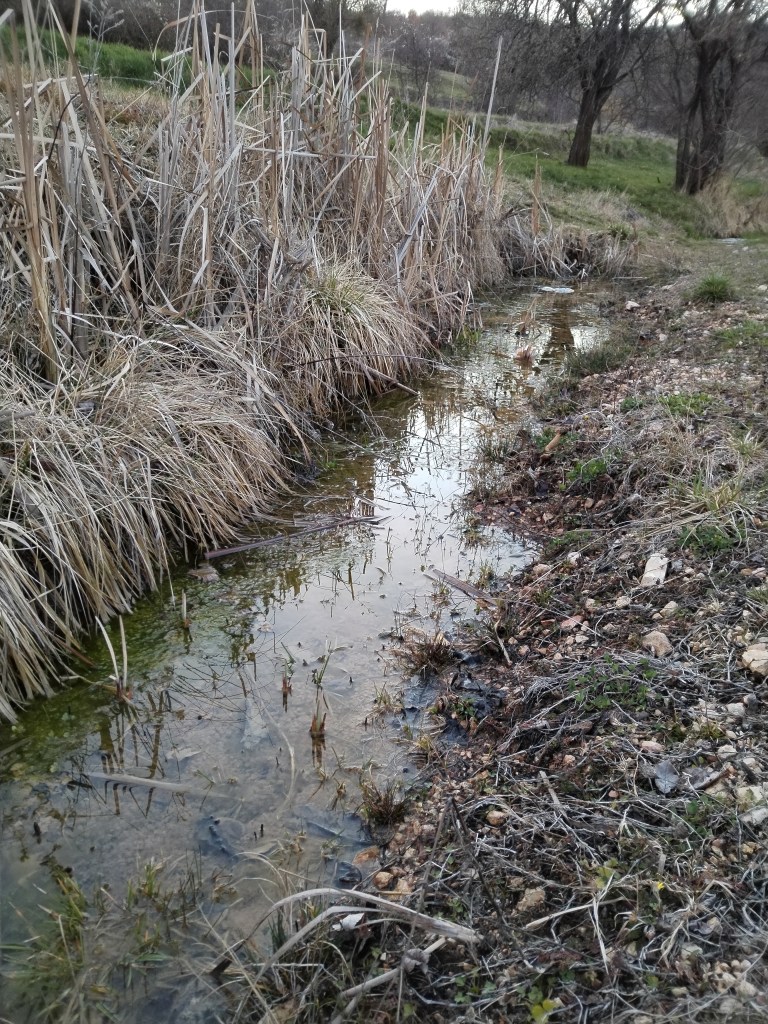
All amphibians (at least in Kosovo, there are a few exceptions of species living in the soil or in caves) require aquatic habitats for at least part of their life cycle. So, to find the amphibians, I first had to find the ponds, rivers, and other habitats that are favourable for them in Bozevce. Unfortunately, I know only one small ditch and one pond in Bozevce. Although the soil is rich in clay, the bedrock is limestone, a very porous rock that easily absorbs water., which could explain why there are not more ponds. However, there are several streams, some of which dry up in the summer, and a larger river, which I have already told you about, and which flows into Perlepnica Lake.
The only pond that I know… is ours! Scouts dug it last summer, and even if it is quite small, it’s already a nice habitat for amphibians with plants starting to grow and plenty of aquatic insects (preys for amphibians). And the ditch, which is fed by a spring and therefore never dry, is also very close to our property.

Since October, and despite knowing only a few places favourable for amphibians, I have already observed 5 species.
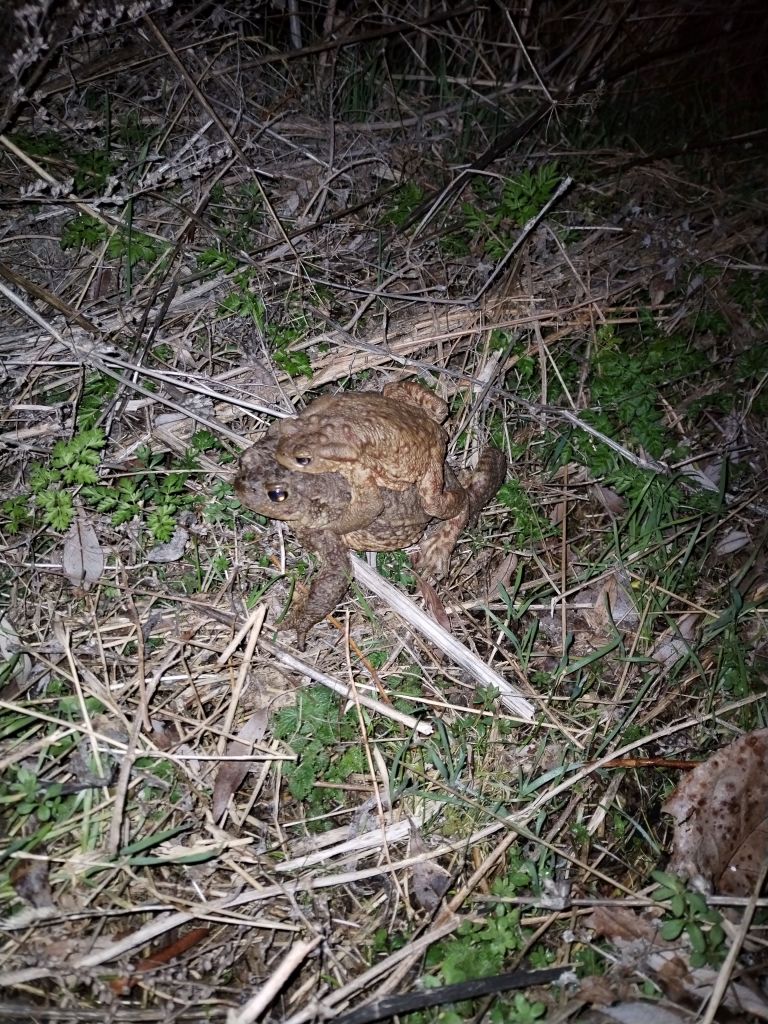
In the ditch, three species reproduce. In august, I observed adults and tadpoles of Yellow-bellied toad (Bombina variegata), a very beautiful species which appreciates temporary (or not), warm and sunny habitats. Two weeks ago, I went there with a lamp after sunset, and I observed two more species. Agile frogs (Rana dalmatina) were already into the ditch, with males singing and around fifteen egg clutches. Common toads (Bufo bufo) however, were on their way: some of them were walking on the road, whereas a few males (which are much smaller than females) were already in the ditch. Two weeks ago, there were not yet eggs, but when I went yesterday, 7-8 “ribbons” of eggs were there. In fact, whereas the eggs from frogs are laid in clutches, who look like balls, toads’ eggs are laid in ribbons.


Agile frog (Rana dalmatina), Yellow-bellied toad (Bombina variegata) and the toads’ egg ribbons in the ditch.
Male toads compete for females (which, contrary to common belief, are not frogs, as there are different species of toads, and different species of frogs). To be sure to mate with a female, they can even mount the females’ backs before she arrives at the pond, in a posture called amplexus, and travel all the way to the pond like this!
Although our pond is recent, Agile frogs are already breeding in it! We observed 4 egg clutches there, and at least five adults. Last year, we also had some tadpoles from Yellow-bellied toad in the pond, but because scouts brought them… This is not a very good idea: if your pond is favourable for amphibians, they will find it on their own… as Agile frogs did!

In one small stream (which after leaving Bozevce goes to Berivojce and then flows into Kriva River), I observed two more species. Fire salamanders (Salamandra salamandra) are strictly terrestrial during their adult life but larvae grow in small brooks or ponds with clean water. During the autumn, we saw on two occasions a salamander crushed on the road. I was wondering where they were reproducing and the finding of larva in this stream gave me the answer. Contrary to frogs and toads, salamanders don’t lay eggs but give birth to larva.
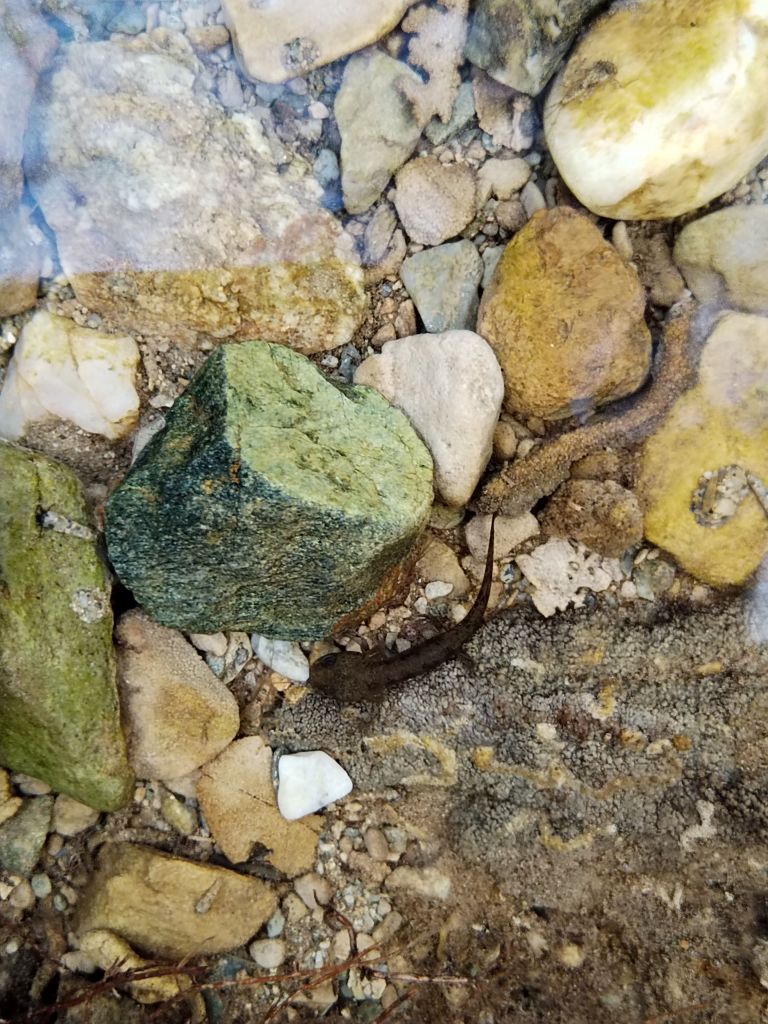

And finally, I also observed on this stream Greek stream frog (Rana graeca). It is very similar to the agile frog, but unlike the latter, it breeds in streams, not ponds. Unlike the other 4 species, which breed throughout Europe, this species lives only in the Balkan Peninsula.
The 5 species that we have observed so far are not considered threatened on a European scale. They are also quite common and well distributed in Kosovo. However, amphibians are one the most endangered groups of vertebrates. Climate change, destruction of wetlands, fragmentation of habitats, diseases, invasive species… The threats are numerous and amphibian populations are declining around the world. Therefore, even these “common” species and above all their habitats should be protected. And offering new habitats to amphibians, like ponds, is also useful to help these slugs eaters (and therefore, helpers of the gardeners) to cope with all these challenges.
So, for now, we know that 5 species of amphibians breed in Bozevce. In Kosovo, 14 species of amphibians are known. 3 of them live only in the mountains (notably the very rare black salamander) and there is very little chance of finding them in Bozevce. But the 6 other species are quite well distributed around the country, and we can hope to find them, to extend the list of amphibians in Bozevce!
 Permaculture as a Path to Peace