


Today, I’m going to tell you about a bird with a very particular lifestyle: the dipper!

It’s a passerine, like Tits, Sparrows, or Jay… but a passerine that spends a lot of time in water!
The dipper is a small, stocky bird. Its head and nape are chocolate-colored, and its plastron is white. It can be observed in fast-flowing, clear-water rocky streams and rivers with riffles and exposed rocks, and with abundant invertebrate prey. A good part of his time is spent doing a series of dives in all seasons – up to 600 times a day! It enters underwater for a few seconds (where it sees very well) and stabilizes itself upright on the bottom thanks to its long legs, spreading its wings slightly to resist the current. When the water is deeper or choppy, it spreads its stubby tail and uses its wings to propel itself and resist the current more. It is particularly fond of Gammarus, which are small freshwater crustaceans, as well as aquatic larvae and insects, small fish and even spiders. Perfectly adapted to aquatic life, the dipper benefits from waterproof plumage and a membrane covering its nostrils which can be blocked when underwater.
When time to breed comes (i.e. mid-March to May), the parents build a nest of moss which they line with leaves and grass with an entrance on the side, nest which they install in a crevice or under a bridge. Male and female both sing. The female incubates 3 to 6 small eggs for a little over 2 weeks. The parents then feed the young who can swim before they can fly! The juveniles, recognizable by their grey streaked colour on the chest, then leave their parents to establish themselves on their own territory.


The dipper is patchily distributed across Eurasia, and around 200,000 pairs are believed to nest in Europe. Sedentary, dippers move only during harsh winters to lower altitude. Dippers are very sensitive to pollution of rivers and streams, notably because pollution adversely affects aquatic invertebrates, its preys. Habitat degradation, water abstraction and water impoundment are also threatening dippers.

So, are our river in Bozevce of good quality? Probably, because we observed dippers there!
We observed this agile bird on the river which aliments Perlepnica lake. On this beautiful river there are a lot of small dams, and each time, we observed dippers just above dams. Even if dams can threaten dippers because they break ecological continuity and create deeper water which becomes less favourable for the dipper’s prey, it looks like our smart birds still manage to find its food.

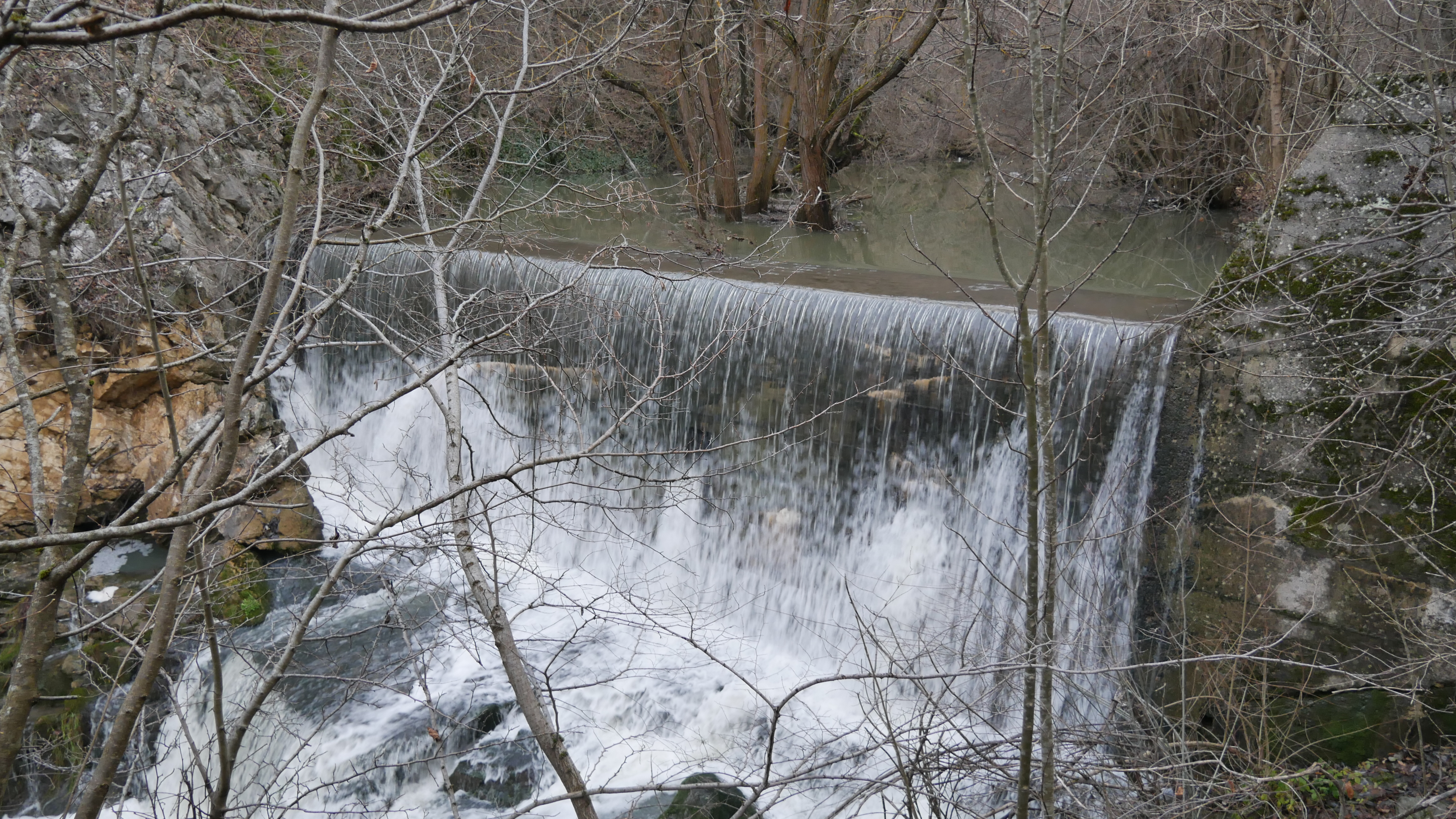

Pictures of two of the places where we observed Dippers and the only picture that I succeed to take of this elusive bird.
Sources:
BirdLife International. 2018. Cinclus cinclus. The IUCN Red List of Threatened Species 2018: e.T22708156A131946814. https://dx.doi.org/10.2305/IUCN.UK.2018-2.RLTS.T22708156A131946814.en. Accessed on 13 January 2024.
 Permaculture as a Path to Peace